

By the end of the lesson you should be able to:
- Explain why we need to reference
- Name the referencing system used at MLC
- Recognise when a reference is required
- Use Citefast to reference
What is referencing?
Watch this video.
After viewing
“Referencing is the system you use … to acknowledge other people’s ideas or research …”
(University of Southern Queensland, n.d.)
A set of instructions that tell you in what order to put the information.
Some other words you might come across:
- Bibliography
- Cite
- Citation
- Attribution
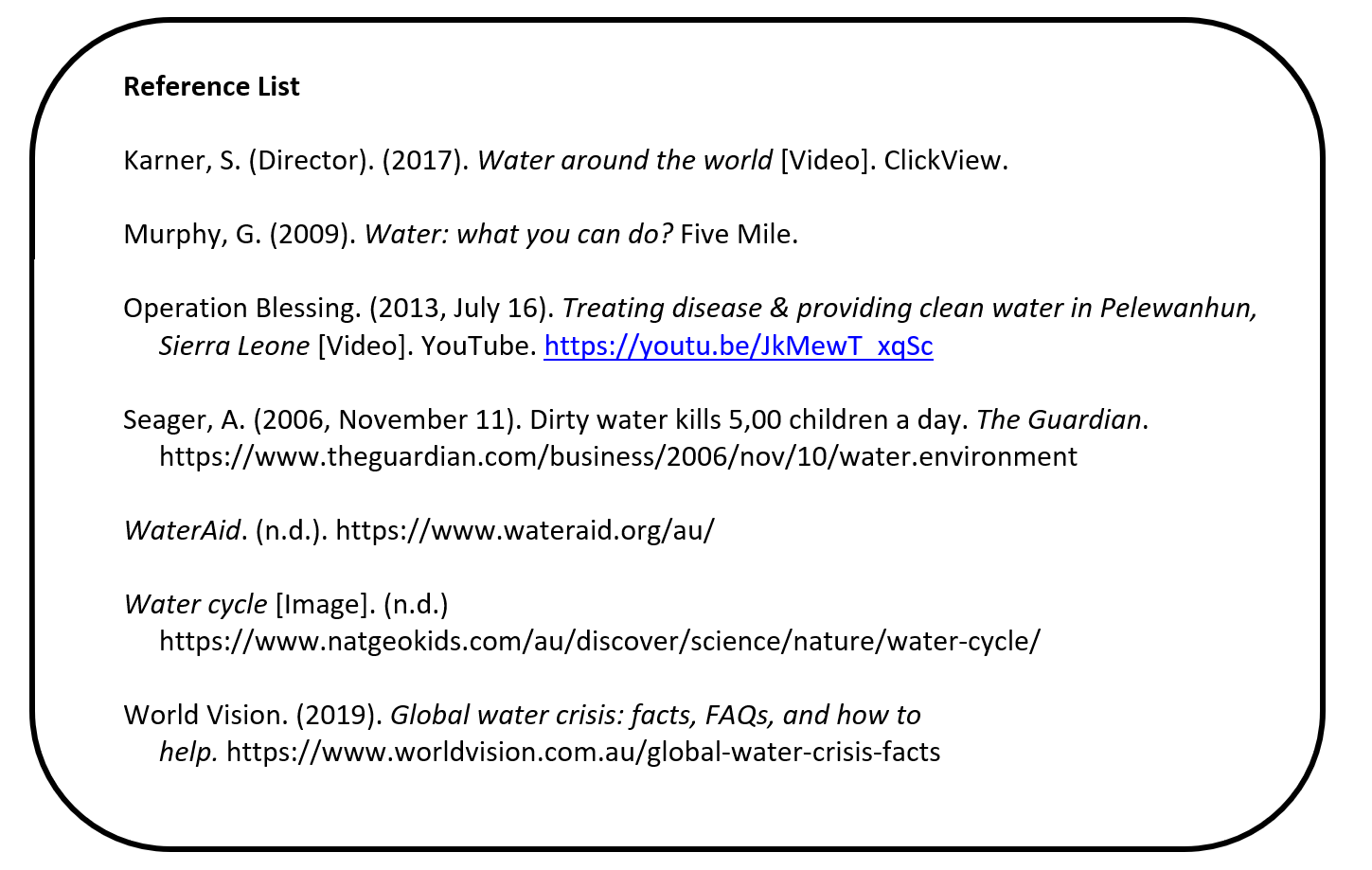
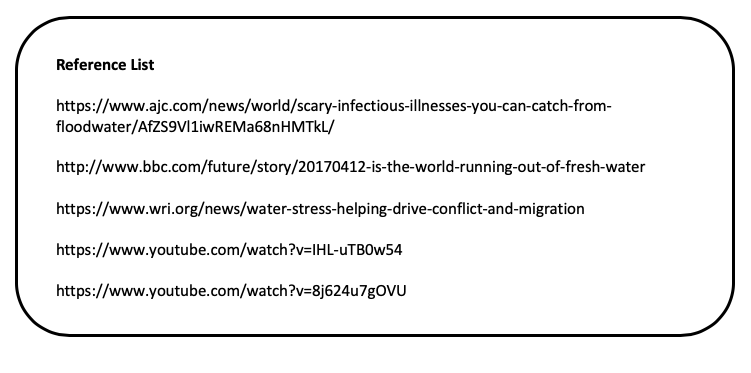
What does a reference list look like?
Can you spot at least 5 differences?
Correct format
Incorrect format
Why do we reference?
- For academic honesty and ethical behaviour
- To give your work credibility
- To allow people to follow up your sources
- To avoid plagiarism and follow the law
The Copyright Act states that creators have the moral right to be attributed (or credited) for their work.
(Australian Copyright Council, 2019)
MLC Assessment Policy
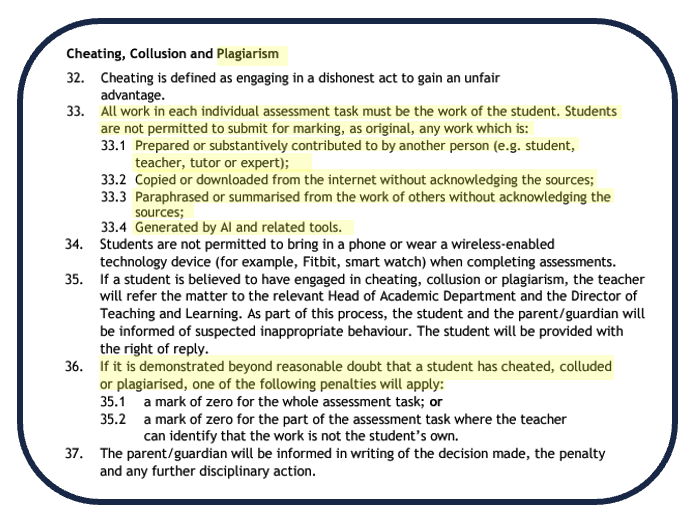
Examples of plagiarism
CNN. (2018). Melania Trump and Michelle Obama side-by-side comparison [Video]. YouTube. https://youtu.be/RcbiGsDMmCM
What do you reference?
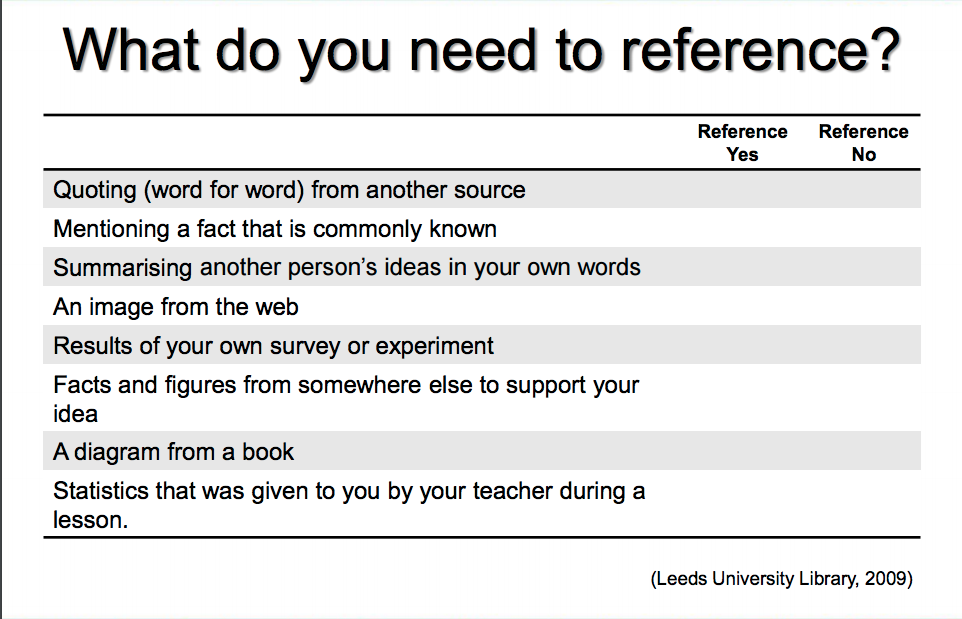
APA Basics
The referencing system most used at MLC is APA 7 – American Psychological Association (APA) – version 7.
A referencing system provides guidelines for citing various sources of information in a consistent manner. All reference lists contain the following details about each source that is used in your work:
The Four Key Components of APA 7:
Author(s): The person(s) or organisation(s) responsible for creating the work
Date: The year of publication or creation
Title: The title of the work being cited
Source origin: The publication or retrieval details for the work (i.e. publisher, volume and issue numbers, or URL)
List all references in alphabetical order in one list.
Examples of common formats:
Books:
Author, A. A. (Year). Title of book. Publisher.
Crilly, A. J. (2007). 50 mathematical ideas you really need to know. Quercus.
Websites:
Author, A. A. (Year, Month Day). Title of web page. Site name. URL
Ghose, T. (2023, March 1). What is the Fibonacci sequence? Live Science. https://www.livescience.com/37470-fibonacci-sequence.html
Online Videos:
Name of account. (Specific date). Title of the video [Video]. Site name. URL.
Society for Research in Child Development. (2020, January 23). John Bowlby and Attachment Theory [Video]. YouTube. https://www.youtube.com/watch?v=Exf_rR1NnNs
Where can I get help with my referencing?
- MLC Referencing Guide (2023) (APA Referencing 7th Ed – Made easy)
This can be downloaded and stored on your device - You Teacher or Teacher Librarian
- Use the Online Catalogue and databases to help you gather the information you need
- Word – inbuilt bibliography tool. View video at the end of this page.
- Online Referencing Generator
- Citefast – set up a free account using your MLC email address
Citefast
- Citefast is an online tool that helps you create a bibiography in APA style.
- Go to https://www.citefast.com/ and set up your account. (Bookmark the link for quick access if you haven’t already done so)
Citing ChatGPT
What about citing ChatGPT?
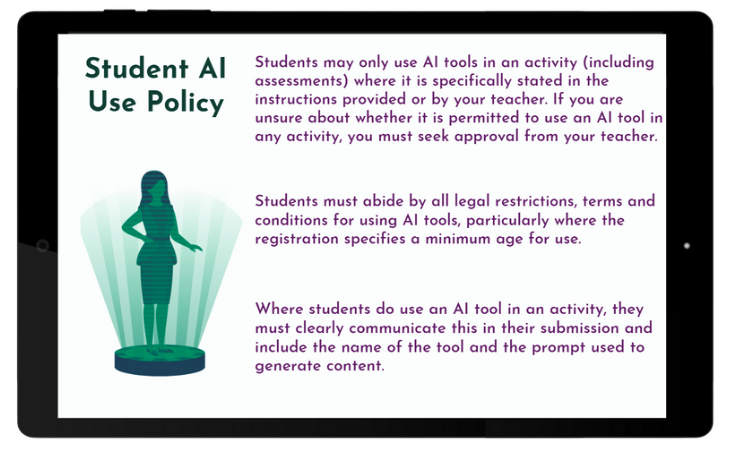
How to cite AI generative tools?
Note: The following is related to the use of ChatGPT for research-based learning, i.e. using ChatGPT to gather information, answer an inquiry focus question.
In addition to academic integrity issues, when referencing ChatGPT there is an absence of traditional authorship and publication information with AI-generated content, making citing it in academic work rather complex.
ChatGPT -According to APA (McAdoo, 2023) it should be treated as though the creator of the AI model is the author, and citing it like software is considered appropriate.
At MLC? As at June, 2023
The expectation for referencing ChatGPT and other AI tools is evolving, so what it recommended below is subject to change.
Year 7 & 8 – Include an end-text reference list & provide the share link from the AI tool after the referencing list.
Referencing Format:
Author of AI Model used. (Year of AI model used). Prompt Description. Name of AI model used (Version). URL of the sharelink of the of the AI model used.
Example:
OpenAI. (2023). Prompt, ‘How was Stonehenge built?’ ChatGPT (May 24 version). https://chat.openai.com/share/483cb175-4411-477e-88cf-6dd4ac961177
Year 9
1. Include an in-text reference. Example:
When prompted with “What are man-made causes of salinity in agricultural land in Australia?” the ChatGPT-generated text indicated that there are several man-made causes including land clearing and inefficient irrigation and soil management practices (OpenAI, 2023).
2. Include the end-text reference
Open AI. (2023). Prompt, “What are man-made causes of salinity in agricultural land in Australia?” ChatGPT (May 24 version). https://chat.openai.com/share/4b816d37-bdd9-46b0-9645-eb5777ae7910
Important
Not citing the use of ChatGPT or using it when not permitted could be considered cheating. You should make yourself aware of the MLC Assessment policy.
Citing AI-generated content is complex and you need to verify the accuracy of AI-generated content using reliable sources of information as AI models sometimes produce inaccurate responses.
It is also important to you are aware of the ethical use of AI-generated content and its impact on intellectual property rights. Your teachers may discuss this with you further.
Teacher Demonstration
Your turn
Use Citefast to reference the following book and website.
Then in your L2L ClassOne Note:
- Copy and paste you completed short reference list/ bibliography from Citefast into your L2L OneNote.
- List three things you have learnt today about referencing.
Book
 Strange Mysteries
by Seymour Simon
ISBN: 9780486484716
Websites
Fun Easter Island Facts for Kids – Interesting Information about Rapa Nui
or a website you think you will use for your History Mystery assignment.
Create a bibliography in Word
References
Australian Copyright Council. (2019). Moral rights. https://www.copyright.org.au/acc_prod/ACC/Information_Sheets/Moral_Rights.aspx
Clive Palmer [Image]. (n.d.). https://www.radiotoday.com.au/clive-palmer-pays-for-the-most-political-ads-on-radio/
Leeds University Library. (2009). References and citations explained [PowerPoint slides]. http://skills.library.leeds.ac.uk/lecturer/referencing/workshops/referencesandcitationsexplai ned.ppt
McAdoo, T. (2023, April 7). How to cite ChatGPT. APA Style. https://apastyle.apa.org/blog/how-to-cite-chatgpt
Reasons for referencing. (n.d.). http://www.hawkerc.act.edu.au/__data/assets/pdf_file/0007/268891/3_REASONS_FOR_REFERENCING.pdf
University of Southern Queensland. (n.d.). Referencing. http://www.usq.edu.au/extrafiles/ltsu/templates/ltsu_templates/referencing.htm