
Year 8 English
Representation of Women
POST-WAR PERIOD – 1960s – 1970s
Brainstorm some possible keywords before you begin searching for information.
Some suggestions include:
women 20th century
1960’s
1970s
women social conditions
names of specific novels, plays, poems, characters and/ or famous art works of the time
We recommend you search using the “All Fields” option in the Library Catalogue as well as using the resources below.

3.
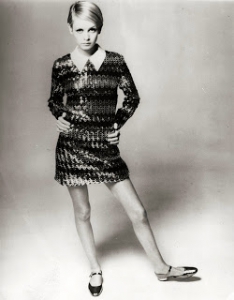
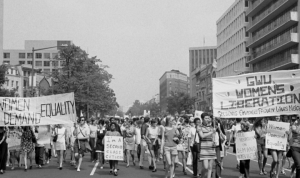
Twiggy
Media
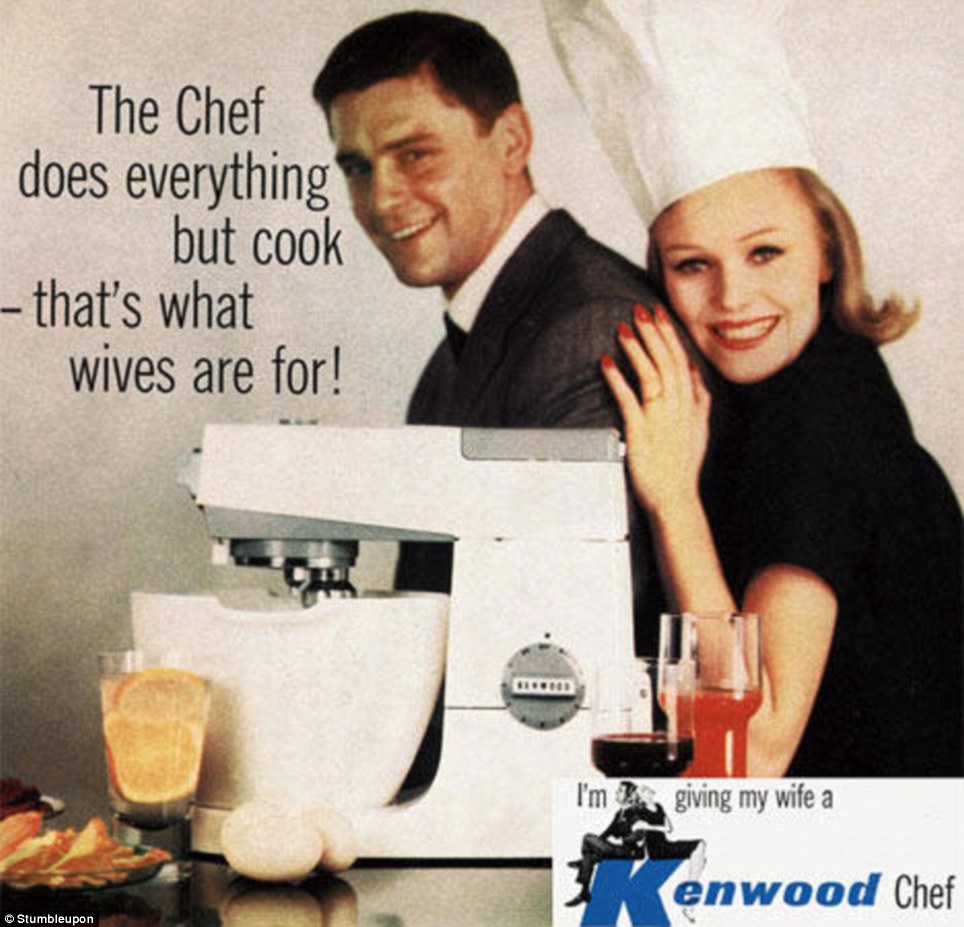
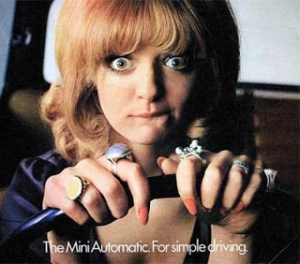
- Advertising
- 1960’s
- 1970s
- AdAccess Search (Use the limiters to find advertising for your time period)
- You will find more on advertising in the resource lists on this page.
- Comic book characters
- Magazines
- Film – Female action heros
- Television shows
- Bewitched (1964-1972)
- Gidget (1965-1966)
- I dream of Jeannie (1965-1970)
- The Brady Bunch (1969 – 1974)
- M.A.S.H. (1972-1983)
- The Bionic Woman (1976 – 1978)
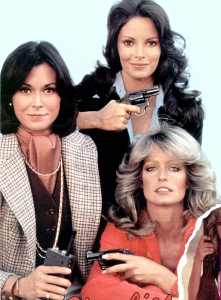
- Charlie’s Angels (1976-1981)
Text Examples
Prose – Text examples
The Secret Seven series by Enid Blyton
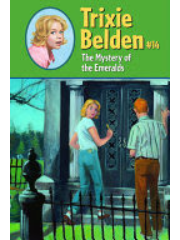 F KEN
F KEN 
Kenny, K. (2006). The mystery of the emeralds. Random House.
Originally published in 1965.
This book is available from the Library.
Visit Trixie Beldon.com for information about the series.
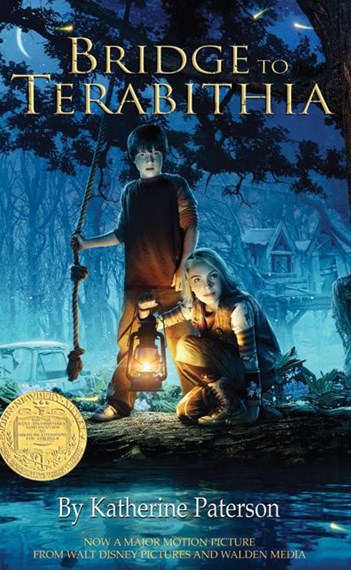 F PAT
F PAT
Paterson, K. (2007). Bridge to Terabithia. Puffin.
Originally published in 1977.
This book is available from the Library.
Print Resources
This is a small selection of print resources recommended by your Teacher Librarians. They will help you to investigate the historical and social background of women from the second half of the 20th Century as well as representations of women from that time period.
You can locate these books using the shelf Call No indicated.
You will also find more resources by searching the Library Catalogue.
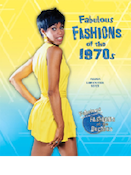

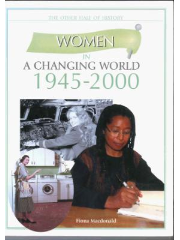 305.40904 MAC
Macdonald, F. (2001). Women in a changing world 1945-2000. Belitha Press.
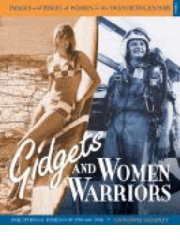
305.40904 GOU
Gourley, C. (2008). Gidgets and women warriors : perceptions of women in the 1950s and 1960s. Twenty-First Century Books.
“As the 1950s began, advertisements, magazine articles, and even government booklets encouraged women to express their femininity and even their patriotism by getting married and having babies” (Blurb).
This book explores how the popular media portrayed women and whether the images were accurate or misleading. Highly recommended.
*Note: The focus is on women in America
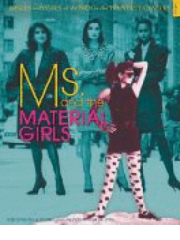
“Popular culture is one window through which we can learn about society. The conflicting stereotypes of women – and the ways those images both influenced and mirrored the changes in women’s lives over the decades – form a fascinating social history of the twentieth century” (Blurb).
Highly recommended. Includes commentary on women in advertising, magazines, fashion and modelling, music, television and films, women in the news and politics. Lots of examples.
*Note: The focus is on women in America
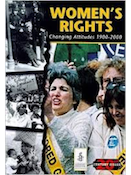
305.42 STE
Stearman, K. (1999). Women’s rights: Changing attitudes 1900-2000. Wayland.
Go to pages 34 – 47.
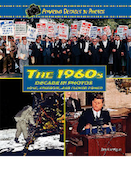
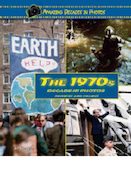 973.923 COR
Corrigan, J. The 1960s decade in photos: love, freedom, and flower power. Enslow Publishing.
Corrigan, J. The 1970s decade in photos: protest and change. Enslow Publishing.
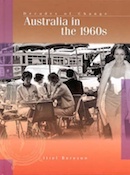
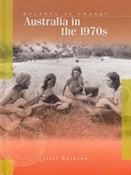
994.05 BER
Bereson, I. (2000). Australia in the 1960s. Echidna Books.
Bereson, I. (2000). Australia in the 1970s. Echidna Books.
For more print resources click here

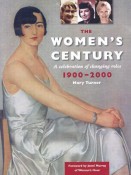 305.40904 TUR
Turner, M. (2003). The women’s century : a celebration of changing roles 1900-2000. National Archives of Australia
Provides comprehensive contextual coverage of the changing role of women for each decade.
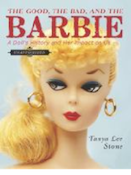
Barbie originated in 1959. This book traces Barbie’s history and development and how she has always mirrored what is current in American culture and fashion.
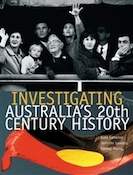
Start at p.169: “Changing roles of women.”
For more print resources click here
eBooks

Coming soon.
eResources


Websites
Here are some websites that your Teacher Librarians have evaluated for your use. If you search the free internet yourself be sure to evaluate the website. Refer to Thinking Critically about Web Information.
Note: Be mindful that much of what is on the free internet for this topic is content created by students, including university level, and you don’t know what marks they received. Remember you want to find material that is suited to your age and comes from an authoritative source. We have check these ones for you.
AdAge. (2003, September 15). Women: Representations in advertising. http://adage.com/article/adage-encyclopedia/women-representations-advertising/98938/
AdAge. (2014, September 2). A look back at portrayals of women in advertising. http://adage.com/article/news/a-back-portrayals-women-advertising/294756/
British Library. (n.d.). Timeline of women’s liberation. https://www.bl.uk/sisterhood/timeline
Jenson, D. (2015, January 24). Feminism on television in the 1960s, 1970s and early 1980s. https://waverlyhs.weebly.com/us-history-blog-may-2014—may-2015/feminism-on-television-in-the-1960s-1970s-early-1980s
Khan Academy. (n.d.). Second-wave feminism. https://www.khanacademy.org/humanities/us-history/postwarera/1960s-america/a/second-wave-feminism
Napikoski, L. (2017, December 1). Feminism of “Bewitched”. https://www.thoughtco.com/feminism-of-bewitched-3529013
Napikoski, L. (2017, March 18). Feminism in 1960s sitcoms. https://www.thoughtco.com/feminism-in-1960s-sitcoms-3529026
Mattel. (n.d.). Barbie: history. http://www.barbiemedia.com/about-barbie/history.html
Videos
Date first broadcast: 27 May 1969
BBC. (2012, July 24). History file, 20th Century World: Changing role of women in the 1960s. http://www.bbc.co.uk/programmes/p00wfrgf
*Note: The focus in this video is on women in Britain.
*Note: The focus in this video is on women in Britain.
Baricevic, T., Baden-Powell, E., Vaughan, M., Butler, N., & Williams, B. (2015). Australian pop culture 1960s – 1970s [Video]. ClickView database.
1960s – now [Video]. (1998). In Women in Australia : 1890-1990. ClickView database.
Priestley, P. (2012). Twiggy : the face of the 60s [Video]. ClickView database.
Buss, J., & Morrison, S. (2014). The times they are a changin’ [Video]. ClickView database.