
Year 10 Economics & Business
Hypothetical Economy
What is the government’s role in the economy?
An externality is a cost or benefit that arises from production and falls on someone other than the producer, or a cost or benefit that arises from consumption and falls on someone other than the consumer. A negative externality imposes an external cost and a positive externality creates an external benefit.
Positive externalities
Governments encourage increased production of goods and services that have positive externalities.
Positive externalities exist when some of the benefits associated with production or consumption “spill over” to third parties— people other than the producer or consumer of the product.
For example the government subsidises education because its benefits flow to the students and to society in general. We would have fewer benefits linked to education without subsidisation.

Negative externalities
Negative externalities exist when some of the costs associated with production or consumption “spill over” to third parties— people other than the producer or consumer of the product.
One example is pollution of lakes and rivers caused, for example, by industrial waste. The pollution affects everybody who uses the lakes and rivers, including those who had no part in producing or purchasing the products causing the pollution. Government regulates pollution. The environment would be far more polluted without government action.
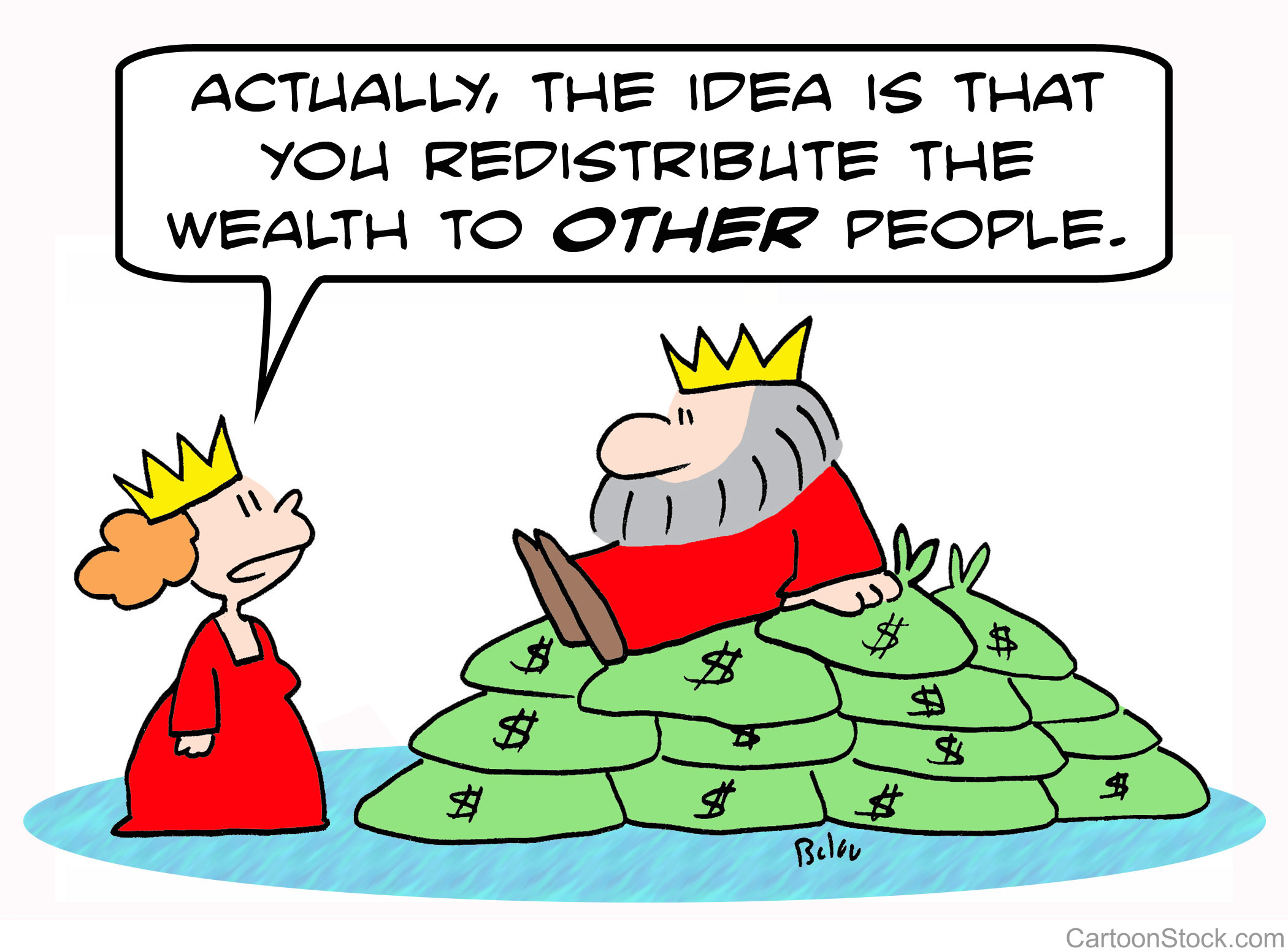 When the income distribution is very unequal in an economy, with a small number of people getting a large portion of the income, many politicians start looking for ways to justly redistribute some of the income so that the poor aren’t as poor and the rich aren’t as rich. Some of the options that they consider include taxes, benefits in-kind, subsidies, welfare, and unemployment benefits.
Taxation
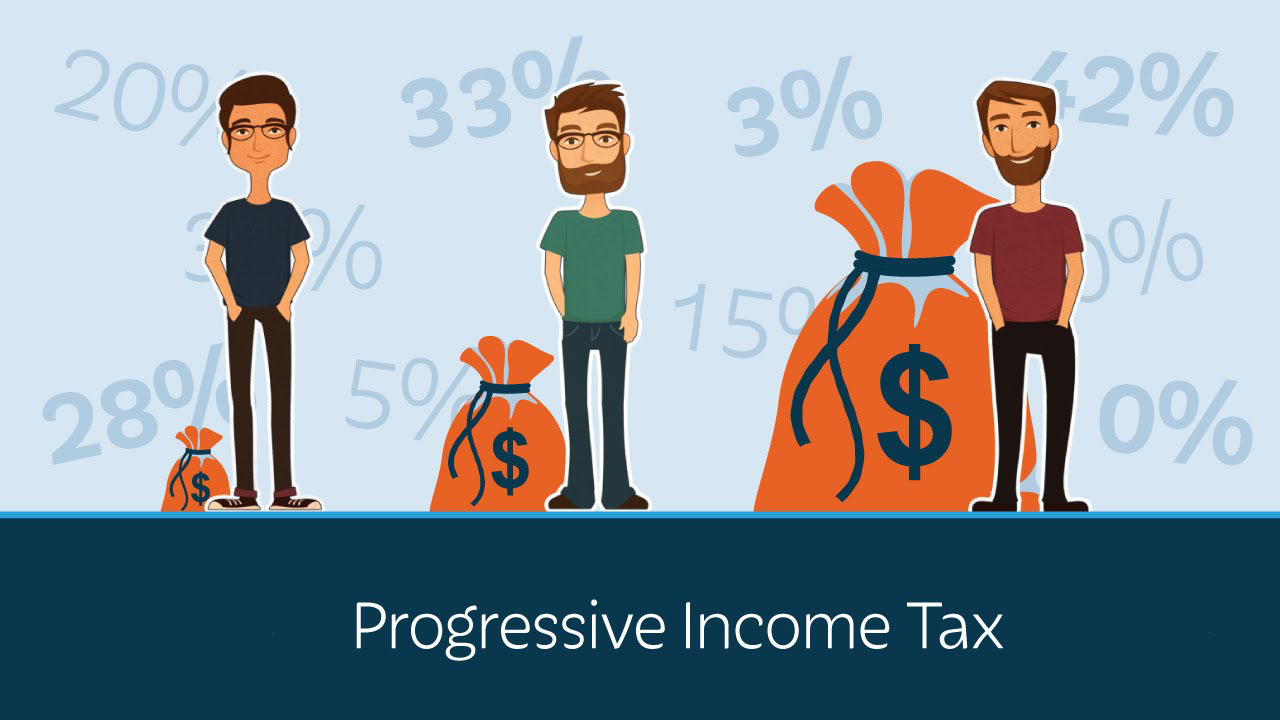
In Australia the government uses a progressive income tax system. This means that the more income you earn, the more you pay in tax so that the government takes a larger percentage from higher incomes and a smaller percentage from lower incomes.
Ultimately meaning that the poor keep a larger percentage of their income than the rich do (though the amount that the poor take home is still lower than that of the rich).
Benefits in-kind and subsidies
Benefits in-kind are those services, such as healthcare and education, that are provided free or heavily discounted at the point of consumption. These benefits can make a considerable impact on final income, increasing it considerably for the poorest, and narrowing the gap between rich and poor.
Education
The United Nations Convention on the Rights of the Child says that every child has the right to an education. In Australia this is achieved by making it compulsory and free. Free education is provided at all state schools, however even these schools charge small amounts to cover costs. Currently primary schools in Western Australia charge parents around $60 a year. This means the government is heavily subsidising (paying psrt of the cost to keep it low).
Healthcare
The Australian Government’s funding includes three major national subsidy schemes: Medicare, the Pharmaceutical Benefits Scheme and the 30% Private Health Insurance Rebate.

Medicare is Australia’s healthcare system.
Medicare provides access to:
- free treatment as a public (Medicare) patient in a public hospital, and
- free or subsidised treatment by medical practitioners including general practitioners, specialists, participating optometrists or dentists (for specified services only)
- subsidies for prescribed medicines (with a safety net providing free medicines for the chronically ill).

This scheme provides affordable access to a wide range of medicines for all Australians by subsidising part of the cost for common prescription medicines. This makes it much cheaper for people to receive medicine.

The private health insurance rebate is an amount the government contributes towards the cost of private hospital health insurance premiums. The maximum amount is 30% but it is income tested, which means your eligibility to receive it depends on your income. It is designed to encourage people to join a private health insurance fund and ultimately save the government money by not having to provide as many medical services.
Welfare and unemployment benefits
These are payments given to support people depending on their income. Those people earning more money will either receive less money or will not be eligible at all for the payment.
In the Australian system, benefits come in four basic forms: pensions; allowances; supplementary payments; and family payments.
Pensions
These are regular payments from the government and include the:
- Age Pension – for people who are 65 years and older and who have retired.
- Service Pension – for veterans from the defense forces who no longer work because of age or disability.
- Disability Support Pension – for people who have a permanent medical condition that stops someone from working.
Allowances
These are regular payments to a person to meet needs or expenses and include:
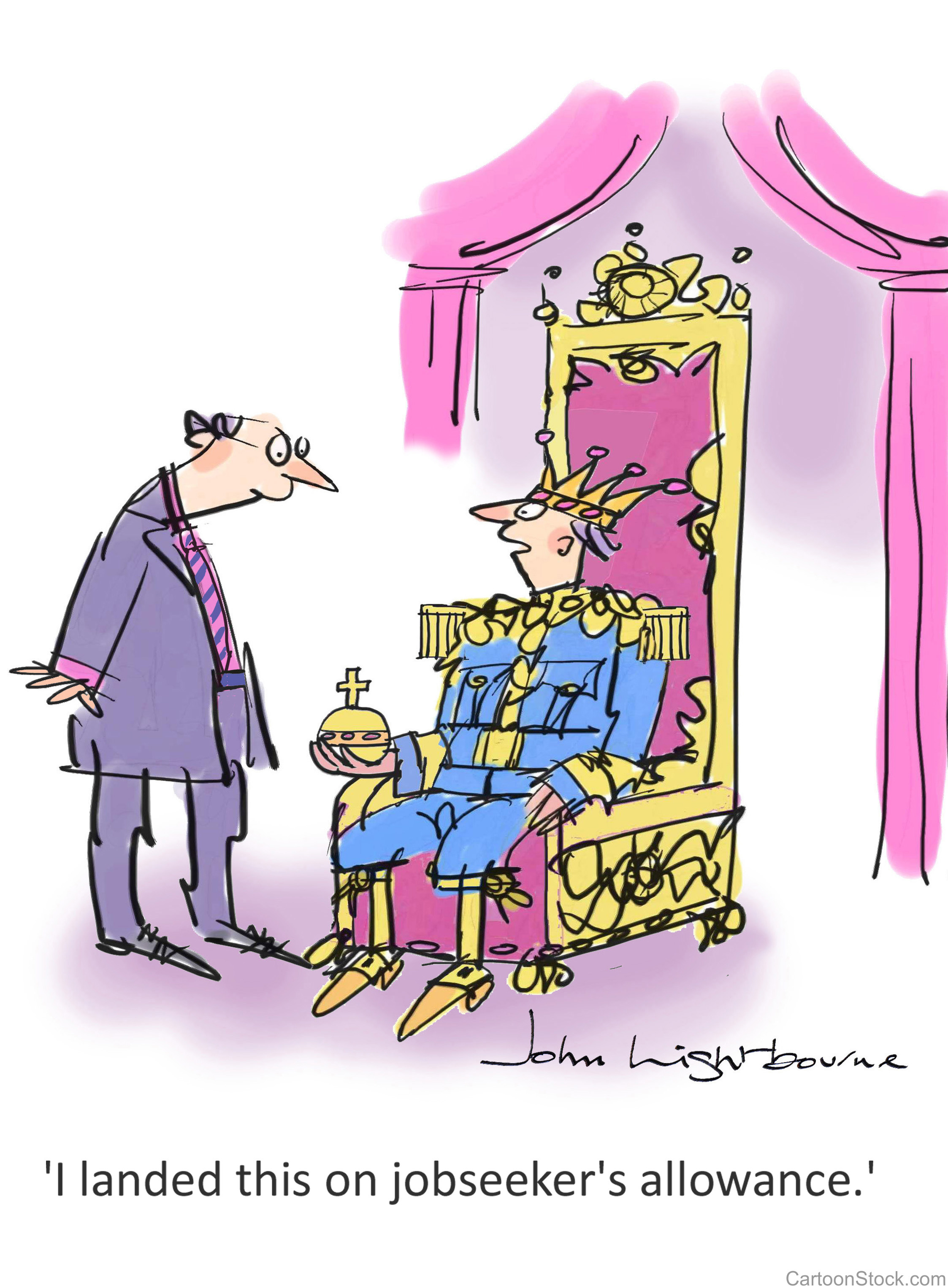
- Newstart allowance – the main income support payment while you’re unemployed and looking for work.
- Youth allowance – financial help if you’re 24 or younger and studying, an Australian Apprentice, looking for work or sick.
Supplementary payments
These tend to be one off payments from the government and include:
- Low income supplement – this is an annual $300 payment that provides assistance with household expenses, including energy costs, for low income households.
- Utilities allowance – this is an allowance to help certain income support recipients with utilities bills, such as electricity and gas
Family payments
These are regular payments designed to help families and include:
- Child care rebate – this covers 50% of out of pocket costs for approved child care.
- Family tax benefit – this is a fornightly payment to help with the cost of raising children.
Competition is important in market economies because it leads to lower production costs and prices. To ensure that the market 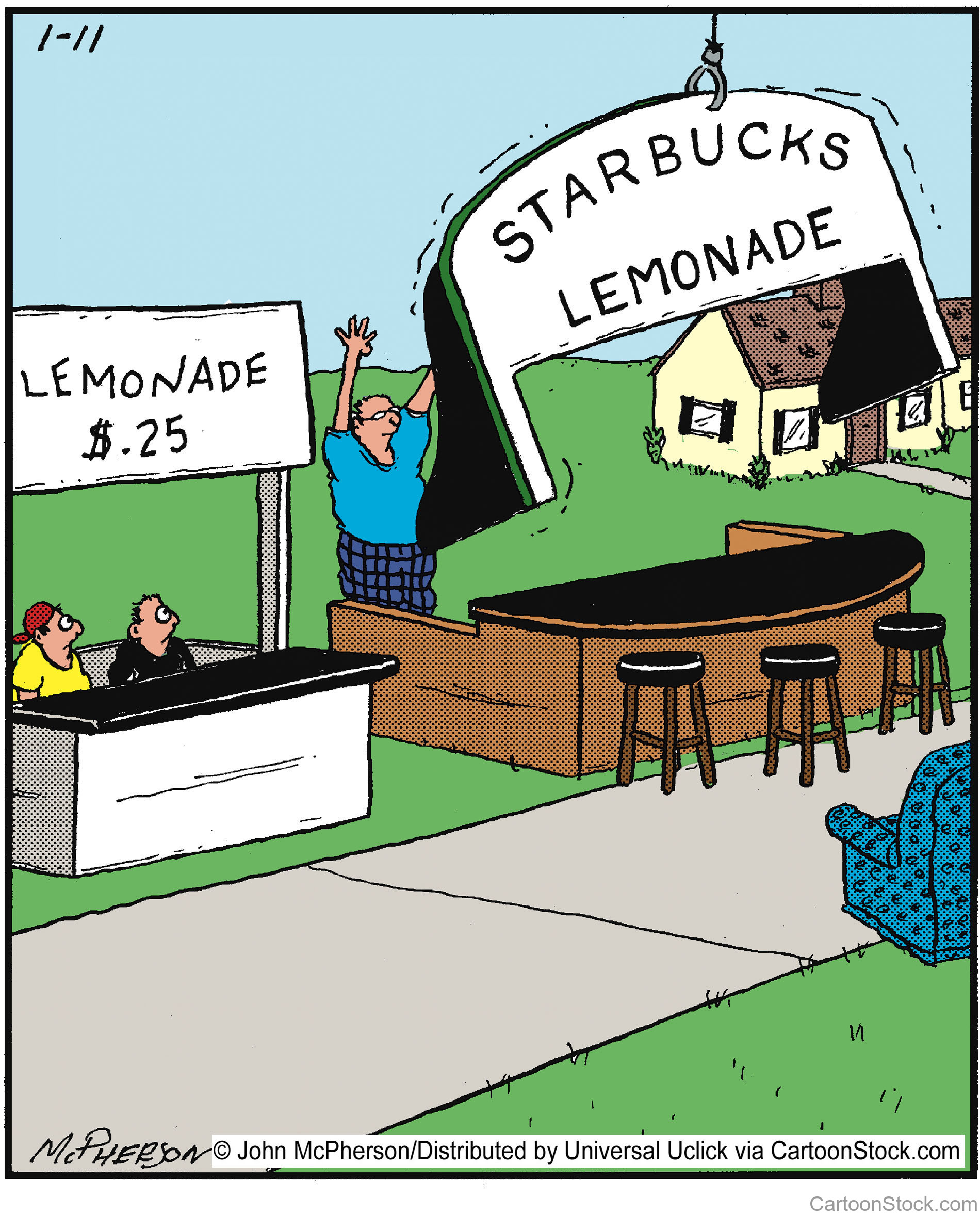 remains competitive, governments will make regulations and laws which act as rules for companies to follow in the market. In Australia, the main federal law about competition is the:
- Competition and Consumer Act 2010
This is a national law that governs how all businesses in Australia must deal with their competitors, suppliers and customers. The law is designed to allow all businesses to compete on their merits in a fair and open market, while ensuring consumers are also treated fairly. It deals with unfair market practices, industry codes of practice, mergers and acquisitions of companies, product safety, collective bargaining, product labelling, price monitoring, and the regulation of industries such as telecommunications, gas, electricity and airports.
The Australian Competition and Consumer Commission (ACCC) administers the CCA. It promotes good business practices for a fair and efficient marketplace.
As this part of the role, governments:
Define and enforce property rights
Governments pass laws and establish a court system to protect these rights. No one could sell property, invest, or have confidence in contracts if this legal system did not exist.
Establish a monetary system
The federal government controls the amount of money circulating in the economy; it also regulates banks and other financial institutions. People would have to barter for the goods and services they wanted if this monetary system did not exist, and they might stay away from banks if banks were not regulated.
A public good is something that more than one person can use at one time and almost impossible to exclude others who haven’t paid from using it. Examples include:

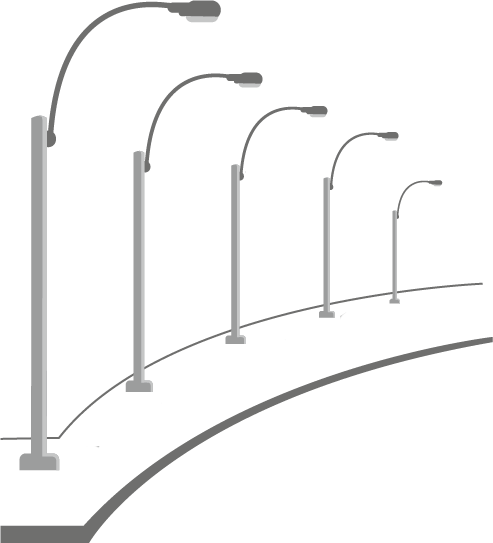

Public goods are generally provided by the government rather than by private firms because:
- it would be costly to exclude individuals who hadn’t paid from consuming a good
- the private company would not be able to make a profit
- the good or service may not be available at all or only to people who can afford it e.g. health care system
- people would be able to use the good or service without paying for it – free rider problem
Watch the video below about the free rider problem.
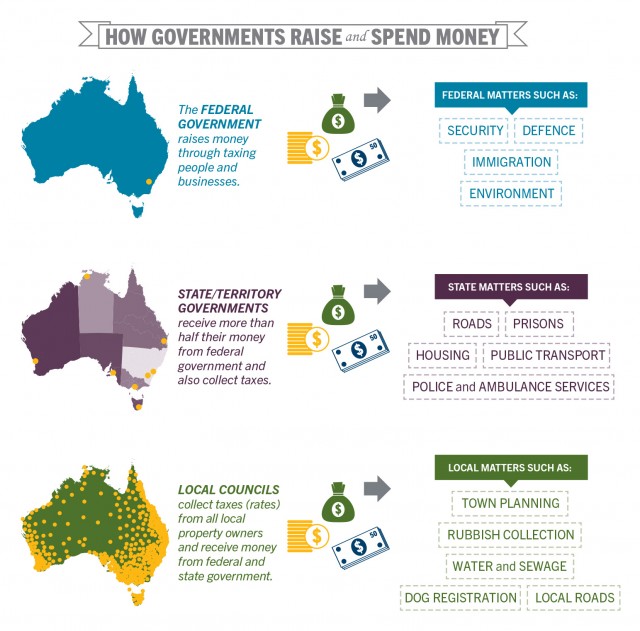
This is where governments tend to get the money to spend on public goods.
The federal government tries to stabilise the economy by using:
- fiscal policy (by raising or lowering taxes, or by government spending), and
- monetary policy (by controlling the money supply or by changing interest rates).
The government can use either policies or both to help the economy.
Fiscal policy
Spending

Fiscal policy can be used to slow down run away growth, stop an economy in free fall and speed up a recovery.
The government can increase spending if it wants to create more demand in an economy. If the government buys goods and services, it means that businesses make sales and have to increase production. If they have to increase production, they may have to bring laid off workers back or even hire new workers. The workers get paid and will have money to buy goods and services resulting in more sales to businesses and jobs for people and so on. Decreasing government spending will reduce aggregate demand and can be used to slow down growth if the economy is getting overheated, where prolonged periods of growth causes high levels of inflation.
Fiscal policy
Changing the tax rate
Increasing or lowering tax rates can also have an effect on demand. If you receive a cut in your tax rates, that means there is more money in your pocket to spend or save. If you spend it, you increase demand in the economy. If you save it, you usually will dump the money in a bank account and the bank will lend the money out to borrowers who will spend it.
Monetary Policy

If the RBA increases the money supply, it usually results in lower interest rates and an increase in demand for goods and services at a particular price level because money is cheaper to borrow. If money is cheaper to borrower, people tend to spend more. On the other hand, if the RBA reduces the supply of money, this raises interest rates and reduces demand at any given price level because money is more expensive to borrow. Consequently, if the government wants to speed up a recovery, it will increase the money supply, and if it wants to cool an overheated economy, it will decrease the money supply.