
(Notes, n.d.)

(Notes, n.d.)
By the end of the lesson you should be able to:
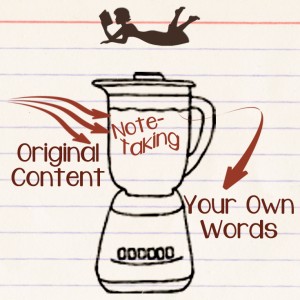
(Blender, n.d.)

(Note-taking, n.d.)
What is note-taking?
The information may come from reading and viewing material, or when you listen to your teacher present information in a lecture.
How will taking good notes help me with my learning?
Taking notes helps you to focus attention during class and remember the ideas and facts presented once class is over. It can also help you to make connections and elaborate on classroom discussion topics. It helps you process information more fully, and to recall information with greater ease. It will also make studying for tests and exams easier. It is important you find the note-taking method that works best for you and the topic.
(Road to success, 2010)
Why is it important to be able to write good notes?
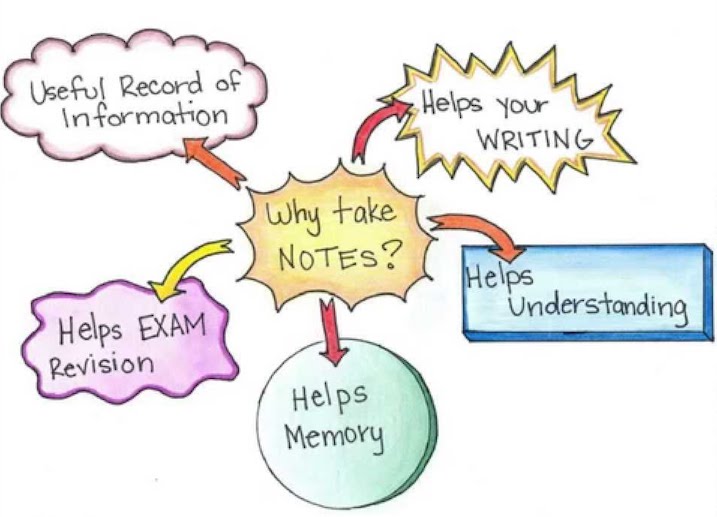
(Why take notes, n.d.)
How do you take notes?
When reading information from a text try the following:
1. Skim for an overview
2. What to write down
3. How to write notes
(Quill & Townsend, 2009).

(Highlighting notes, n.d.)
Note-taking Methods
Method 1: Outline Method
Uses headings and bullet points to organise information.
Each section starts with a heading of the main topic.
Subtopics and supporting details are indented and written underneath the heading.
Try using a numbered outline where appropriate to organise the information.
Leave spaces between sections or main ideas.
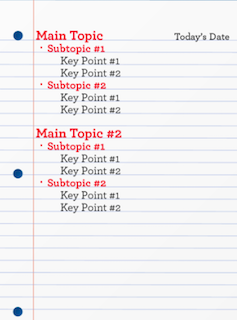
(Outline method, n.d.)
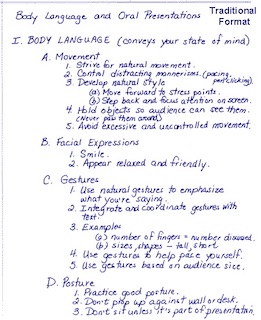
(Example notes 2, n.d.)
Method 2: Mapping Method
A visual way to organise your notes. It is similar to mind mapping.
Place your main topic in the centre and connect the key points (sub-topics) around it with branches leading out to supporting details.
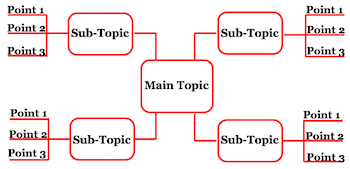
(Map method, n.d.)
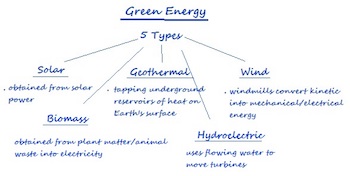
(Map method, n.d.)
Method 3: Cornell / Linear Notes
Uses 2 columns.
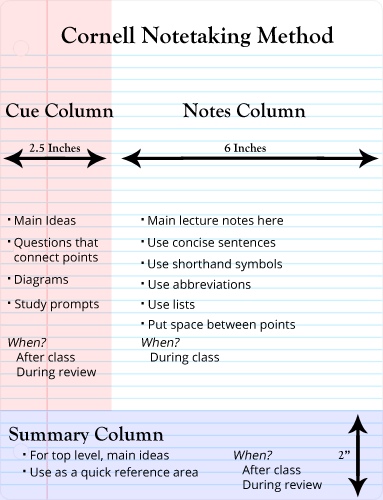
(Cornell notes 1, n.d.)
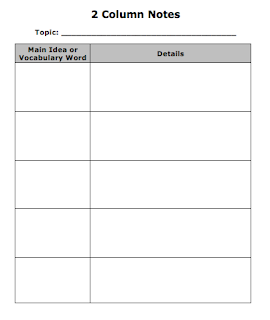
(2 column notes, n.d.)
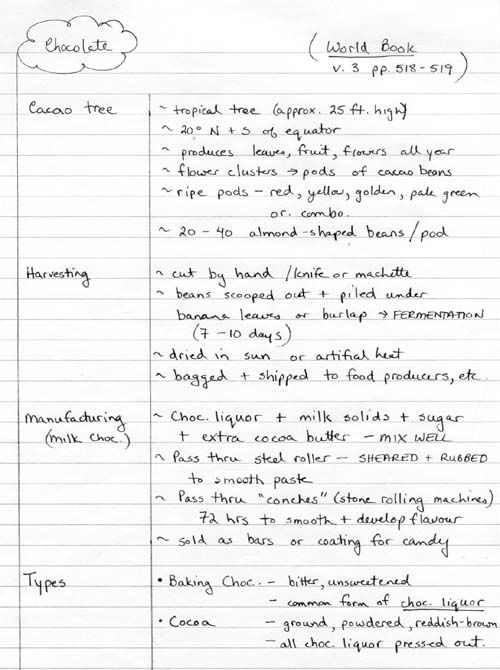
(Example notes 1, n.d.)
Write a summary
At the end of your notes it is always a good idea to write a summary to help make sure you understand the topic.
A summary is a brief statement in your own words of the main points you have noted.
Tips:
(Main ideas, n.d.)
Practise Note-taking
Your teacher will lead you through an activity to help you to practise your note-taking skill.
Reference List
Blender [Image]. (n.d.). http://www.risking-failure.com/2013/12/note-taking-a-blender-for-your-brain.html
Cornell notes [Image]. (n.d.). https://pdf.wondershare.com/mobile-app/cornell-note-taking-system.html
Example notes 1 [Image]. (n.d.). http://davidhowald.com/two-column-notes-template/two-column-notes-template-lovely-23-two-column-notes-template-a%C2%9C%C2%88-two-column-notes-template/
Example notes 2 [Image]. (n.d.). https://msliewsclass.weebly.com/outline-method.html
Example notes 3 [Image]. (n.d.). http://blogs.luc.edu/hubbub/uncategorized/methods-for-good-notetaking/
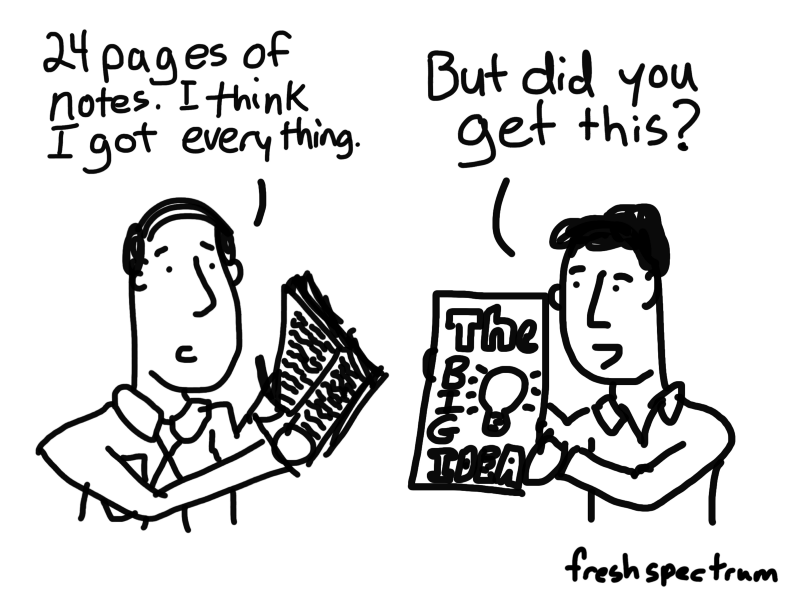
Fresh spectrum. (n.d.). The big idea [Image]. https://medium.com/@steveturnbull/how-do-you-take-notes-a-noteworthy-survey-b808af4b3c57
Highlighting notes [Image]. (n.d.). https://twitter.com/cadburycollege/status/961977994809094146
Main ideas [Image]. (n.d.). https://academichelp.net/academic-assignments/essay/write-summary-essay.html
Map method [Image]. (n.d.). https://www.testprepchampions.com/2017/07/effective-note-taking-strategies.html
Notes [Image]. (n.d.). http://www.arbeckert.com/20160218/the-five-pillars-of-healthy-writing/
Note-taking [Image]. (n.d.). https://www.lynda.com/Business-Skills-tutorials/Note-Taking-Business-Professionals/373782-2.html
Outline Method [Image]. (n.d.). https://www.oxfordlearning.com/5-effective-note-taking-methods/
Quill, A., & Townsend, A. (2009). Think, organise, write: Turn thinking into writing using graphic organisers. FarrBooks.
Roads to success. (2010). Study Skills. https:// cfww.com https://cfwv.com/images/wv/pdfs/rts/Facilitators_Guides/grade_7/G7_Unit4_StudySkills.pdf
Why take notes [Image]. (n.d.). http://athenasguide.blogs.brynmawr.edu/2015/08/10/tips-for-note-taking/