
Year 8 English
Representation of Women
VICTORIAN PERIOD
Search Terms
Brainstorm some possible keywords before you begin searching for information.
Some suggestions include:
victorian period/ time/ era
women nineteenth century
names of specific novels, plays, poems, characters and/ or famous art works of the time
We recommend you search using the “All Fields” option in the Library Catalogue as well as using the resources below.
Example texts – visual and written
Websites to discover primary sources
- British Library – Victorian Britain (women)
- Digital Public Library of America – The New Woman (United States)
Throughout history, and particularly during the Victorian era (mid- to late-1800s), women—especially from the upper and middle classes—had little opportunities beyond those of the hearth and home. The New Woman was a response to these limiting roles of wife and mother.
This website provides a primary source set of written and visual texts for the time period and others so check the date of the sources carefully. Citation information for your bibliographies are also given. Highly recommended. - National Archives (UK)
Images/ Art/ Media
- Art
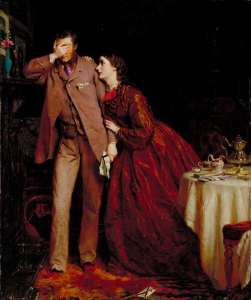
- George Elgar Hicks – Women’s mission: Companion to Manhood (1863)
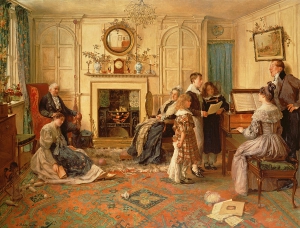
- Home sweet home by Walter Dendy Sandler (c1900)
- Europe – Degas, Monet, Renoir
- Australia – Frederick McCubbin, Jane Sutherland
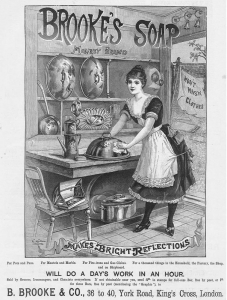
- Advertising
- Photographs
- Magazine’s
Poetry
- “The Angel in the House” by Coventry Patmore
Prose
England
- Oliver Twist By Charles Dickens (1838)
- Jane Eyre by Charlotte Bronte (1847)
- Tale of two cities by Charles Dickens (1859)
- Lucie Manette
- Miss Pross
- Therese Defarge
- Great Expectations by Charles Dickens (1861)
- Miss Havisham
- Estella
America
- Little women by Louisa May Alcott (1868)
Australia
- Seven little Australians by Ethel Turner (1894)
Print Resources
Below is a small selection of print resources recommended by your Teacher Librarians. They contain information about the historical and social background of women in Medieval English society as well as drawing on examples from art and literature of the period.
You can locate these books using the shelf Call No indicated.
You will also find more resources by searching the Library Catalogue.
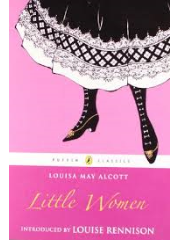 F ALC
F ALC
Alcott, L. M. (2008). Little women. Puffin Books.
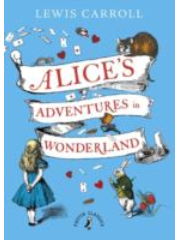 F CAR
F CAR
Carroll, L. (2015). Alice’s adventures in Wonderland. Puffin Books.
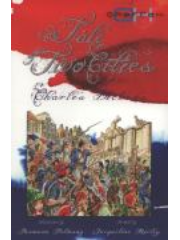 F DIC
F DIC
Morley, J., Dickens, C., & Felmang, R. (2008). A tale of two cities. Book House.
F DIC
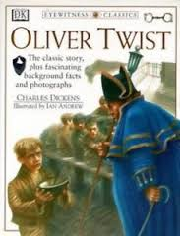 Bray-Moffatt, N., & Dickens, C. (1999). Oliver Twist. Dorling Kindersley.
Dickens, C. (2008). Oliver Twist. Sterling Publishing.
Olmstead, K. (2006). Oliver Twist. (Abridged ed.). Sterling Publishing.
 F DIC
F DIC
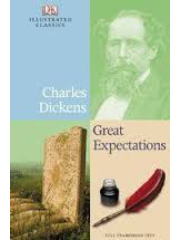
Dickens, C., Glickman, D. L., & Lusiak, C. (2008). Great expectations. Dorling Kindersley.
 F STO
F STO
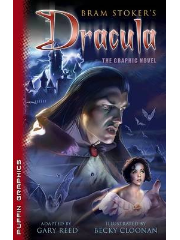
Stoker, B. (2006). Bram Stoker’s Dracula : the graphic novel. Puffin.
 F TUR
F TUR
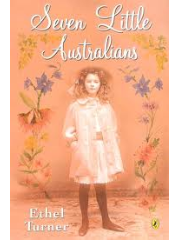
Turner, E. (2003). Seven little Australians. Puffin.
305.4094
Macdonald, F. (2003). 19th-century Europe. Chrysalis.
305.40941
Hyndley, K. (1989). Women and the family. Wayland.
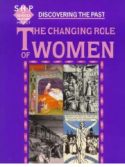
305.42
Bellamy, L., & Moorse, K. (1996). The changing role of women. John Murray.
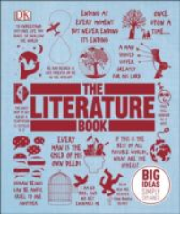
809
Atkinson, S., & Canton, J. (2016). The literature book. DK.
820.9008
Cruttenden, A. (2003). The Victorians : English literature in its historical, cultural and social contexts. Evans Brothers.
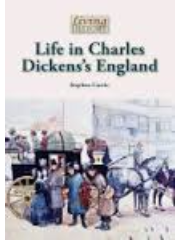 823.8
823.8
Currie, S. (2014). Life in Charles Dickens’s England. Rees Films.
eResources


Websites
Here are some websites that your Teacher Librarians have evaluated for your use. If you search the free internet yourself be sure to evaluate the website. Refer to Thinking Critically about Web Information.
Note: Be mindful that much of what is on the free internet for this topic is content created by students and you don’t know what marks they received. It is best to use websites that come from an authoritative source.
BBC. (2010). History: Victorians. http://www.bbc.co.uk/history/british/victorians/
British Library (n.d.). Discovering literature: Romantics and Victorians. https://www.bl.uk/romantics-and-victorians
Cengage Learning. (2009). Novels for students: Jane Eyre. http://www.encyclopedia.com/arts/educational-magazines/jane-eyre
Cengage Learning. (2009). Novels for students: Little women. http://www.encyclopedia.com/arts/educational-magazines/little-women
Copyright Agency. (n.d.). Seven little Australians. http://readingaustralia.com.au/books/seven-little-australians/
DPLA. (n.d.). Primary source sets: Little women by Louise May Alcott. https://dp.la/primary-source-sets/sets/little-women-by-louisa-may-alcott
Harris, B. (2014). ‘Slaves to the needle’: The seamstress of the 1840s. http://www.victorianweb.org/gender/ugoretz1.html
Hudson, P. (2011). Women’s Work. http://www.bbc.co.uk/history/british/victorians/womens_work_01.shtml
National Archives. (n.d.). Selling the Victorians. http://www.nationalarchives.gov.uk/education/resources/selling-the-victorians/
National Gallery of Victoria. (n.d.) Australian Impressionism: A gender perspective. http://www.ngv.vic.gov.au/australianimpressionism/education/insights_gender.html
Stanford University. (2005). Victorian reading project. http://dickens.stanford.edu/archived/index.html
State Library of Victoria. (n.d.). Women’s rights. http://ergo.slv.vic.gov.au/explore-history/fight-rights/womens-rights
Victoria Web. (2016). Women as subject in Victorian art – Representations of women. http://www.victorianweb.org/gender/arts2.html
Little Women fact file: Women in the 1800s. (n.d.). http://www.scholastic.ca/education/magazines/elt_pdfs/little-women-factfile-616443.pdf
Videos
British Library. (2014, December 19). Gender in 19th Century Britain [Video]. YouTube. https://www.youtube.com/watch?v=vkJJFX8Qn90