Year 11 EALD English
Making Choices

Non-fiction narrative texts are true stories, that include biographies, autobiographies, memoirs, and personal accounts.
What is a biography?
It the story of someone’s real life as written by another person.
What is an autobiography?
It is the story of a person’s life written by the subject themselves, usually spanning their entire life.
Memoirs and personal accounts are autobiographical too, but they only span a part of the person’s life for which they are well known for.
These types of texts present the subject’s story, and they portray the subject’s experience of significant events in their life.
Suggested Texts
Below are some suggested biographies and autobiographies for your task centred around the following kinds of choices:
CLICK HERE to view the full suggested reading list of biographies and autobiographies available from the Library.
Choice to follow your dream
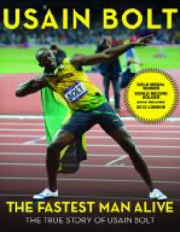 NN 796.422 BOL
Bolt, U., & Custis, S. (2012). The fastest man alive : the true story of Usain Bolt. New York: Sports Publishing.
A skinny kid from thehttps://accessit.mlc.wa.edu.au?serviceId=ExternalEvent&brSn=92300&brKey=1176972092 Jamaican parish of Trelawny, Usain Bolt’s life changed in August 2008 when the Olympic men’s 100-meter starter pistol was followed just 9.69 seconds later by his streak across the finish line and the first of his three gold medals was placed around his neck. In this illustrated celebration of his influences, background, and career trajectory, Bolt shares his story of growing up playing cricket and soccer, and discovering that he could run fast–very fast. He shares stories of his family, friends, and the laidback Jamaican culture, and reveals what makes him tick, where he gets his motivation, and where he takes his inspiration.
Text type: Autobiography
Subject: Sportspeople, Track Athletics
Fastest Man. (2012, July 27). Usain Bolt – The Path To Greatness [Video file]. https://youtu.be/12FIecu858A
One Click. (2016, August 29). The Boy Who Learned to Fly – Usain Bolt [Video file]. https://youtu.be/Qgs5gSKnn7M
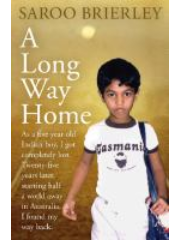 NN 306.874 SAR
Brierley, S., & Buttrose, L. (2013). A long way home. Melbourne, Victoria: Viking.
One eveninhttps://accessit.mlc.wa.edu.au/?serviceId=ExternalEvent&brSn=58027&brKey=93440291g, five-year-old Saroo left his poor village home in India to watch his older brother work at the next town’s train station. His life was about to be utterly transformed. Lost and alone on an unfamiliar train, he found himself taken across the country and deposited in a strange city, unable to explain who he was or where he was from. He’d arrived in Calcutta. After weeks of defying the odds on the city’s notoriously dangerous streets, Saroo was taken in by a government agency and, after failed attempts to find his family, was miraculously adopted by an Australian couple, the Brierleys, and taken to start a new life in Hobart. As an adult, though, he never forgot his Indian roots and kept trying to work out where he came from.
Text type: Autobiography
Subject: Adoption, Families
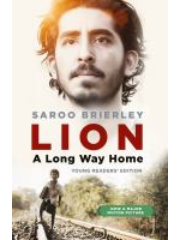
A young reader’s edition is available.
Angus Robertson Bookworld. (2013, July 2). Saroo Brierley: A Long Way Home [Video file]. https://youtu.be/Qgs5gSKnn7M
60 minutes Australia. (2017, April 26). 60 Minutes Australia: Lost & Found (2013) – Part One [Video file]. https://youtu.be/pCvKAtZHG8I
Watch Part Two:
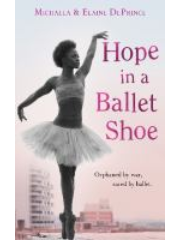 NN 792.802 DEP
DePrince, M., & DePrince, E. (2014). Hope in a ballet shoe : a true story. London, England: Faber & Faber.
From war orphan in Sierra Leone to a soloist with the Dutch National Ballet, Michaela DePrince has beaten extraordinary odds to succeed in the cut-throat world of ballet. As a young orphan she witnesses atrocities that no child ever should, but she finds hope in a magazine photo of a ballerina that the wind blows through the orphanage gates. Adopted by an American couple, she is able to take dance lessons and pursue her dream of becoming a dancer. A heart-breaking, inspiring autobiography by a teenager who shows us that, beyond everything, there is always hope for a better future.
Text type: Autobiography
Subject: Ballet, Adoption, Orphans
NBC News. (2017, July 17). Ballerina Michaela DePrince’s Remarkable Journey [Video file]. https://youtu.be/reZH2B8irtw
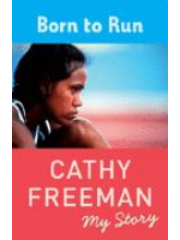 NN 796.42 FRE
Freeman, C. (2007). Born to run : my story. Camberwell, Vic: Penguin
Hi guys, Ever since I was little I only had one dream – to win a gold medal at the Olympics.
When I was twenty-seven years old, my dream came true. I’ll never forget that night at the Sydney 2000 Games – as I crossed the finish line, it was as if the whole of Australia was cheering for me.
Sometimes I still wonder how it happened. When I was growing up, I felt no different to anyone else. I loved having fun with my brothers, sleeping over at nanna’s and going horse riding with my dad. But I especially loved to run. With the help of my family, coaches and teachers, I became the best female 400-metre runner in the world.
I hope you enjoy my story, and that it inspires you to chase after your dreams too! (Blurb).
Text type: Autobiography
Subject: Sportspeople, Track Athletics, Olympics, Aboriginal peoples
ExtraordinaryHeroes. (2010, October 15). Cathy Freeman 2000 Olympics [Video file]. https://youtu.be/rqio9yoaM6M
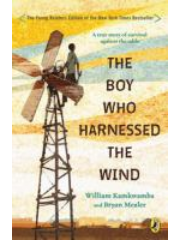 NN 621.31 KAM
Kamkwamba, W., & Mealer, B. (2015). The boy who harnessed the wind. (Young readers edition). New York, New York: Puffin Books.
The story of how an enterprising teenager in Malawi built a windmill from scraps he found around his village and brought electricity, and a future, to his family, after his Malawi village was hit by a drought and everyone’s crops began to fail.
Text type: Autobiography
Subject: Living standards, Power supply, Water supply, Wind power, Rural areas
Audio also available
TED. (2009, September 23). William Kamkwamba: How I harnessed the wind [Video file]. https://youtu.be/crjU5hu2fag
NN 910.41092 WAT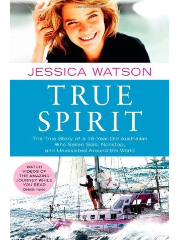
Watson, J. (2010). True spirit : the Aussie girl who took on the world. New York, New York: Atria Books.
This is Jessica Watson’s own account of becoming, at just sixteen, the youngest person to ever sail solo, unassisted and non-stop around the globe in 2010.
After two hundred and ten harrowing days at sea in a 10 meter boat, she shares her preparation, how her parents came to terms with her decision, and a journey that included sleep deprivation, technical problems, gale-force winds, mountainous seas, and hazardous icebergs. She will also share how she managed to maintain composure against solitude that most of us can only imagine dealing with alone on a vast sea, with no land in sight and no help close at hand. (Google Books).
Text type: Autobiography
Subject: Adventures & adventurers, Voyagers and traveling, Sailing
Channel Ten. (2012, August 21). A Sailor’s Story [Video file]. https://youtu.be/hXm3PmrZzI4
Happy & Well. (2012, August 23). Jessica Watson ‘True spirit’ at Young Minds 2012 [Video file]. https://youtu.be/VKH8MFxe_IY
Choice of life or death
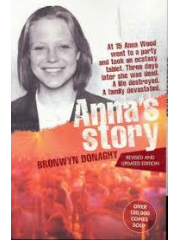 NN 362.2917 WOO
Donaghy, B. (2006). Anna’s story. (Rev. ed.). Pymble, N.S.W: HarperCollins Publishers.
At 15 Anna Wood went to a party and took an ecstasy tablet. Three days later she was dead. A life destroyed, a family devastated, a community in shock. Bronwyn Donaghy interviewed friends, family members and numerous professionals in order to write the story of the circumstances surrounding Anna’s death and of her family’s decision to try and turn tragedy into a positive force for good.
Text type: Biographical account
Subject: Drugs
Channel Ten. (2013, September 16). Dangerous drugs in the spotlight [Video file]. https://youtu.be/QYjkE1uGxj4
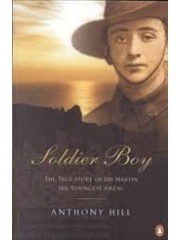 NN 940.426 MAR
Hill, A. (2001). Soldier boy : the true story of Jim Martin the youngest Anzac. Ringwood, Vic: Penguin.
On 28 June 1915, young James Martin sailed from Melbourne aboard the troopship Berrima – bound, ultimately, for Gallipoli. He was just fourteen years old. “Soldier Boy” is Jim’s extraordinary true story, the story of a young and enthusiastic school boy who became Australia’s youngest known Anzac. Four months after leaving his home country he would be numbered among the dead, just one of so many soldier boys who travelled halfway around the world for the chance of adventure.
This is, however, just as much the story of Jim’s mother, Amelia Martin, who had to let him go, of his family who lost a son, a brother, an uncle, a friend. It is about Amelia’s boy who, like so many others, just wanted to be in on the action.
Text type: Biography
Subject: World War I, Soldiers, Gallipoli
Audio also available
Behind the News. (2015, April 27). Anzac Special: The Gallipoli Story [Video file]. https://youtu.be/lpIp9DXJmS8
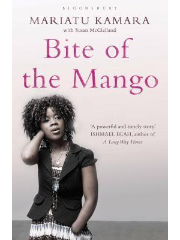 NN 966.404 KAM
Kamara, M., & McClelland, S. (2010). Bite of the mango. London, England: Bloomsbury Publishing.
When Mariatu set out for a neighbourhood village in Sierra Leone, she was kidnapped and tortured, and both of her hands cut off. She turned to begging to survive. In this heart-rending memoir Mariatu shares with readers the details of the brutal attack and the courage, astonishing resilience and hope which led to her recovery. Today she is a UNICEF Special Representative for Children and Armed Conflict.
Text type: Autobiography
Subject: War victims
AnnickPress. (2009, January 30). Bite of the mango by Mariatu Kamara and Susan McClelland [Video file]. https://youtu.be/rwxOoDN5S70
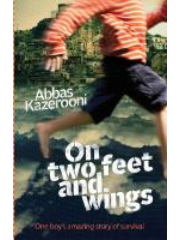
This amazing true story of a boy fleeing Tehran on his own during the Iran-Iraq War provides a powerful child’s-eye view of political tumult, separation, survival, dreams and triumphs in a moving memoir that chronicles extraordinary times in an ordinary boy’s life.
Close to his tenth birthday, Abbas has to leave his parents and friends to escape Tehran. The Iran-Iraq War is at its bloodiest. The ayatollahs, the rulers of Iran, have reduced the age of recruitment into the army. If Abbas doesn’t leave soon, he will have to go to war.
In the strange and often frightening city of Istanbul, Abbas has to grow up fast. Living alone for twelve weeks in a rundown hotel, he has to learn to live by his wits, and watch his back. Will he ever get his dream visa to England?
Text type: Autobiography
Subject: Iranian refugees, Iran-Iraq War
Allen & Unwin. (2012, May 20). On Two Feet and Wings by Abbas Kazerooni – Book Trailer [Video file]. https://youtu.be/tLvPubhnJWI
‘I am most grateful for two things: that I was born in North Korea, and that I escaped from North Korea.’ Yeonmi Park was not dreaming of freedom when she escaped from North Korea. She didn’t even know what it meant to be free. All she knew was that she was running for her life, that if she and her family stayed behind they would die — from starvation, or disease, or even execution. This book is the story of Park’s struggle to survive in the darkest, most repressive country on earth; her harrowing escape through China’s underworld of smugglers and human traffickers; and then her escape from China across the Gobi desert to Mongolia, with only the stars to guide her way, and from there to South Korea and at last to freedom; and finally her emergence as a leading human rights activist — all before her 21st birthday.
Text type: Autobiography
Subject: North Korea, Refugees, Escapes
Learn Liberty. (2017, June 27). Go To Where The Light Is: Escaping North Korea — Yeonmi Park [Video file]. https://youtu.be/7x_-_94ga3Q
Penguin Press. (2015, September 17). Yeonmi Park, author of IN ORDER TO LIVE: A North Korean Girl’s Journey to Freedom [Video file]. https://youtu.be/34m5C8CyLms
Choice to overcome adversity
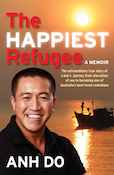 NN 792.702 DO
Do, A. (2010). The happiest refugee. Sydney, N.S.W: Allen & Unwin.
Anh Do nearly didn’t make it to Australia. His entire family came close to losing their lives on the sea as they escaped from war-torn Vietnam in an overcrowded boat. But nothing – not murderous pirates, nor the imminent threat of death by hunger, disease or dehydration as they drifted for days – could quench their desire to make a better life in a country where freedom existed.
Text type: Autobiography
Subject: Refugees
 eBook also available via BorrowBox
ABC TV. (2011, March 2). Adam Hills IGST: Anh Do – Episode 4 [Video file]. https://youtu.be/WhGETRI81DE
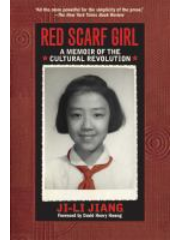 NN 951.05 JIA
Jiang, J. (1998). Red scarf girl: a memoir of the cultural revolution. New York, New York: HarperTrophy.
It’s 1966, and twelve-year-old Ji-li Jiang has everything a girl could want: brains, popularity, and a bright future in Communist China. But it’s also the year that China’s leader, Mao Ze-dong, launches the Cultural Revolution–and Ji-li’s world begins to fall apart. Over the next few years, people who were once her friends and neighbours turn on her and her family, forcing them to live in constant terror of arrest. And when Ji-li’s father is finally imprisoned, she is forced to face the most dreadful decision of her young life: denounce him and break with her family, or refuse to testify against him and sacrifice her future in her beloved Communist Party.
Text type: Memoir/ Personal Narrative
Subject: China, History
eBook also available via BorrowBox
jjiang8888. (2011, August 27). Ji-li Jiang’s DVD [Video file]. https://youtu.be/z2tzUpVu3Cg
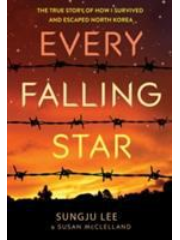 NN 951.9305 LEE
Lee, S., & McClelland, S. (2016). Every falling star : the true story of how I survived and escaped North Korea. London, England: Amulet Books.
Every Falling Star is the memoir of Sungju Lee, a North Korean boy who was forced at the age of twelve to live on the streets and fend for himself. Sungju tells what it was like to be separated from his parents; to be alone; to have to create a new family with his gang, his ‘brothers’; to be hungry every day; and to fear arrest, imprisonment, and even execution. In this compelling true story, Lee, with Susan McClelland, grimly reveals that many of the freedoms taken for granted in the West do not exist in other lands … and that hope is often all there is to cling to.
Text type: Autobiography
Subject: North Korea, Homelessness, Survival
eBook also available via BorrowBox
Abram books (2016, June 14). Every Falling Star by Sungju Lee [Video file]. https://youtu.be/4jaa2sTelk4
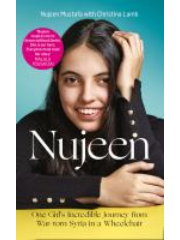 NN 305.906914 MUS
Mustafa, N., & Lamb, C. (2016). Nujeen : one girl’s incredible journey from war-torn Syria in a wheelchair. London, England: William Collins.
The story of Nujeen, a 17-year-old Syrian girl now living in Germany. The trip to get there from her homeland of Syria was extraordinary. Born with cerebral palsy and confined to a wheelchair, leaving Syria with her sister was no easy option, but her courage, optimism and determination brought her through the harrowing journey. Nujeen’s story personalises the critical refugee crisis.
Text type: Autobiography
Subject: Cerabral palsy, Disabilities, Syria, Refugees
Harper Broadcast. (2016, October 29). Christina Lamb on Nujeen Mustafa’s Incredible Journey from War-torn Syria in a Wheelchair [Video file]. https://youtu.be/qYuQnadrg70
Tedx Talks. (2016, October 29). I Am Not a Number: A Refugee’s Tale – Nujeen Mustafa [Video file]. https://youtu.be/R3r4gnSouqQ
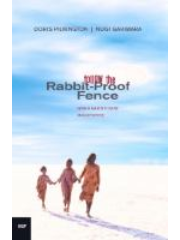 NN 994.104 PIL
Pilkington, D. (2002). Follow the rabbit-proof fence. St Lucia, Qld: University of Queensland Press.
This is the true account of the author’s mother Molly, made legend by the film ‘Rabbit-Proof Fence’.
In 1931 Molly led her two sisters on an extraordinary 1,600 kilometre walk across remote Western Australia. Aged 8, 11 and 14, they escaped the confinement of a government institution for Aboriginal children removed from their families. Barefoot, without provisions or maps, tracked by Native Police and search planes, the girls followed the rabbit-proof fence, knowing it would lead them home.
Text type: Biographical account
Subject: Aboriginal children, Stolen generations
eAudio book also available via Borrowbox
Record Picture Company. (2012, January 26). Rabbit proof fence(2002) trailer [Video file]. https://youtu.be/Lbnk8wSVMaM
Choice to stand up for your beliefs
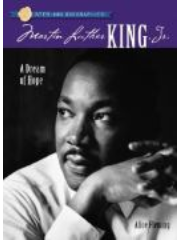 323.1196073 KIN
Fleming, A. (2008). Martin Luther King, Jr. : a dream of hope. New York, New York: Stirling Publishing company.
I have a dream. Those rousing words, spoken by Martin Luther King, Jr. at an historic civil rights rally in Washington, D.C., brought hope to those who listened: hope that in the future there might not be two Americas—one black and one white—but instead a country united, with justice for all. Here is King’s inspiring story, which began in Atlanta, Georgia in 1929 and came to a tragic end on April 4, 1968 when an assassin fatally shot him.
The pastor of a small Baptist church in Montgomery, Alabama, King became the driving force of the civil rights movement when he led a black boycott of the city’s bus lines. His philosophy of nonviolence, and his breathtaking eloquence, helped free African Americans from decades of oppression and finally won them the rights—and opportunities—they deserved.
Text type: Biographical
Subject: United States, African American civil rights, Racial conflict
Biography. (2015, July 23). Martin Luther King Jr. – Civil Rights Leader [Video file]. https://youtu.be/bOEkRwJETN8
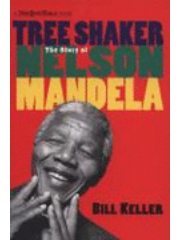 NN 968.06 MAN
Keller, B., & New York Times (2008). Tree shaker : the story of Nelson Mandela. London, England: Kingfisher
This biography looks at the life of Nelson Mandela and the events that led Mandela from his tribal homeland to the centre of the struggle for racial equality in South Africa. From early acts of protest to
the leadership of an apartheid-free nation, this is an honest portrayal of a
modern political and social icon and places his awe-inspiring accomplishments in historical context for a new generation to admire.
Text type: Biographical
Subject: South Africa, Apartheid, Racial discrimination
Biography. (2018, February 9). Nelson Mandela, Anti-Apartheid Activist and World Leader [Video file]. https://youtu.be/PyfOrbO0xf4
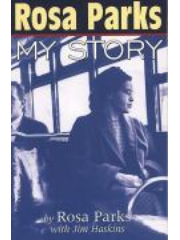 NN 323.1196073 PAR
Parks, R., & Haskins, J. (1999). Rosa Parks : my story. New York, New York: Penguin.
The black woman whose acts of civil disobedience led to the 1956 Supreme Court order to desegregate buses in Montgomery, Alabama, explains what she did and why.
Text type: Autobiography
Subject: African Americans, Segregation, Racial discrimination
History. (2015, December 1). Rosa Parks and the Montgomery Bus Boycott: 60 Years Later – Fast Facts [Video file]. https://youtu.be/SZsOZSrcjfw
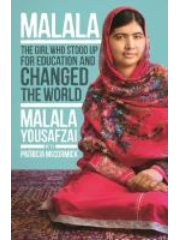 NN 371.82209549 YOU
Yousafzai, M., & McCormick, P. (2014). Malala : the girl who stood up for education and changed the world. London, England: Indigo.
On Tuesday, 9 October, 2012, a fifteen-year-old Pakistani girl was shot in the face at point-blank range because she had the temerity to stand up to the Taliban. That girl, Malala Yousafzai, survived the attack and the shocking story made headlines around the world. Overnight, Malala became a global symbol of peaceful protest and education for all.
Text type: Autobiography
Subject: Girls education, Civil rights, Women in Pakistan
CNN. (2013, July 12). The story of Malala Yousafzai [Video file]. https://youtu.be/NIqOhxQ0-H8
Expository texts are information-based. Their purpose is to inform, describe, explain or “expose” the subject to educate the reader.
Examples include – textbooks, news articles, non-fiction books.
Suggested Texts
Below are some suggested expository texts for your task:
CLICK HERE to view the full suggested reading list of expository texts about a range of topics.
 178 ROC
Rockliff, M. (2010). Get real. Philadelphia, Pennsylvania: Running Press.
Can you change the world with your wallet? You already do.
In this book, Mara Rockliff reveals what you’re really buying when you spend your money on a cell phone, a cheap t-shirt, or fast food—and shows the way to better choices, both for people and the planet.
Start seeing the world for real, and discover how you can make a difference. You’ve got buying power—now let’s see you change the world for good!
This is a consumer guide that provides insight into a range of topics from truth about fast-food nutrition to the environmental costs of cheap products, and advises on how to make informed shopping decisions
Text type: Expository
Subject: Consumer education, Ethics, Retail trade
 338.47687 CLI
Cline, E. (2013). Overdressed : the shockingly high cost of cheap fashion. New York, New York: Portfolio/Penguin.
Evaluates the costs of low-priced clothing while tracing the author’s own transformation to a conscientious shopper, a journey during which she visited a garment factory, learned to resole shoes, and shopped for local, sustainable clothing.
Text type: Expository
Subject: Fashion, Environmental aspects, Consumption
 333.9116 FEI
Feinstein, S. (2016). Drying up : running out of water. New York, New York: Enslow Publishing.
Water is an essential part of life on Earth. But in some places, it’s running out or it’s too polluted to consume. Learn about water scarcity, pollution, its impact on public health, and how to protect his diminishing resource. Also discover what steps you can take to help stop the drought.
Text type: Expository
Subject: Environmental protection, Water conservation, Water pollution
 333.95616 KUR
Kurlansky, M. (2014). World without fish : how could we let this happen. New York, New York: Workman Publishing.
The alarming true story of what’s happening to the fish, the oceans and our environment. It tells how and why the fish we most commonly eat, including tuna, salmon, cod and swordfish, could become extinct within fifty years. It is a call to action. With its focus on supporting sustainable fishing it shows how from little steps to big, kids can – and must make a difference.
Text type: Expository
Subject: Fishing industry, Environmental aspects, Sustainable development
 363.728 GAY
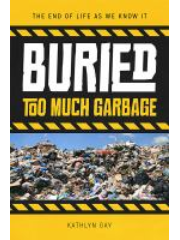
Gay, K. (2016). Buried : too much garbage. New York, New York: Enslow Publishing.
A large population creates a lot of garbage. But are composting and recycling really making a difference? Informational text, expert analysis, and seminal public documents will enlighten you about the garbage situation we are facing, which not only includes mountains of food scraps and discarded possessions, but hazardous, toxic, and radioactive waste as well. Take action boxes provide ideas on how to do your part to improve the situation, such as reducing how much waste you produce and purchasing reusable water bottles.
Text type: Expository
Subject: Recycling, Rubbish disposal, Waste products, Environmental aspects
 363.738746 GOR
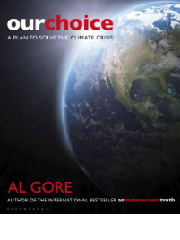
Gore, A. (2009). Our choice : a plan to solve the climate crisis. London, England: Bloomsbury Publishing.
A co-recipient of the Nobel Peace Prize in 2007 for his environmental work, the [former] Vice President Al Gore illuminates the real solutions to the climate crisis and describes a comprehensive global strategy to implement them urgently.
Our Choice is an inspiring call to action for those ready to fight for solutions that really work, describing how the bold choices necessary to save the earth’s climate should also be the foundations of policies worldwide to create new jobs and stimulate sustainable economic progress.
Text type: Expository
Subject: Climate change, Greenhouse effect, Sustainable development
A younger reader’s version is available
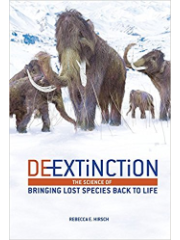
In the twenty-first century, because of climate change and other human activities, many animal species have become extinct, and many others are at risk of extinction.
Once they are gone, we cannot bring them back or can we?
With techniques such as cloning, scientists want to reverse extinction and return lost species to the wild. Some scientists want to create clones of recently extinct animals, while others want to make new hybrid animals.
Many people are opposed to de-extinction. Some critics say that the work diverts attention from efforts to save species that are endangered. Others say that de-extinction amounts to scientists “playing God.” Explore the pros and cons of de-extinction and the cutting-edge science that makes it possible.
Text type: Expository
Subject: Extinct animals, Fossils, Cloning, Genetics
 595.79 BEN
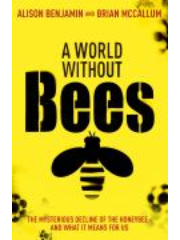
Benjamin, A., & McCallum, B. (2009). A world without bees. London, England: Guardian Newspapers.
“If the bee disappeared off the surface of the globe then man would only have four years of life left.” –Albert Einstein.
A third of all that we eat, and much of what we wear, relies on pollination by honeybees. So if — or when — the world loses its black-and-yellow workers, the consequences will be dire.What is behind this catastrophe? Viruses, parasites, pesticides and climate change have all been blamed, as has modern monoculture agribusiness.
In this timely book, two keen amateur apiarists investigate all the claims and counterclaims with the help of scientists and beekeepers in Europe, America and elsewhere. They ask the question that will soon be on everyone’s lips: Is there any possible way of saving the honeybees — and with them, the world as we know it?
Text type: Expository
Subject: Bees, Diseases, Ecosystems
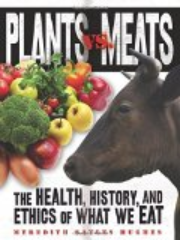
No one can live without food, but what you eat is a personal decision. Today many people are examining nutritional advice and choosing to eat more vegetables and fruits and less meat. But is all meat bad for you? What does the science say?
People also make food choices for ethical and religious reasons. Some vegetarians and vegans avoid meat because they believe killing animals is wrong. Other people shun meat from factory farms. Recently, more people are seeking out foods grown locally and organically.
What do you choose to eat and why? This book will help you make decisions to support your values.
Text type: Expository
Subject: Vegetarianism, Diets, Food
 613.283 GIL
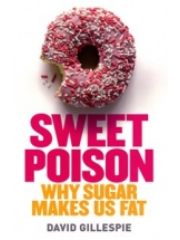
Gillespie, D. (2008). Sweet poison : why sugar makes us fat. Camberwell, Vic: Penguin.
David Gillespie was 40kg overweight, lethargic, sleep-deprived, and the father of four, with twins on the way. He knew he needed to lose weight fast, but he had run out of diets – all had failed.
After doing some reading on evolution (why weren’t our forebears fat?), David cut sugar – specifically fructose – from his diet. He immediately started to lose weight, and kept it off. Slim, trim and fired up, David set out to look at the connection between sugar, our soaring obesity rates and some of the more worrying disease of the twenty-first century, and discovered some startling facts in the process.
Text type: Expository
Subject: Nutrition, Sugar
In his signature eloquent prose, backed up by thorough research, Russell Freedman tells the story of Austrian-born Hans Scholl and his sister Sophie.
They belonged to Hitler Youth as young children, but began to doubt the Nazi regime. As older students, the Scholls and a few friends formed the White Rose, a campaign of active resistance to Hitler and the Nazis.
Risking imprisonment or even execution, the White Rose members distributed leaflets urging Germans to defy the Nazi government. Their belief that freedom was worth dying for will inspire young readers to stand up for what they believe in.
Text type: Expository
Subject: Activism, German history, Political systems, World War II
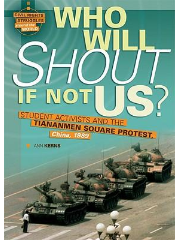
In this story of a historic clash between repressive government forces and individuals seeking freedom, explore the reasons that led students in China to defy authority.
Text type: Expository
Subject: Protests, Political systems, Chinese history
You have time in the Library to browse and select your text.
Talk to Ms Bright if you need help with your selection.
Good luck!