
YEAR 9 ENGLISH
Film Study: Hidden Figures
INTRODUCTION
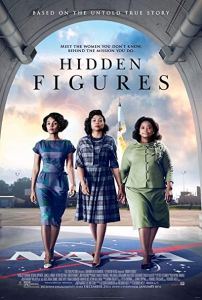
“Hidden Figures tells the incredible untold story of Katherine Johnson, Dorothy Vaughan and Mary Jackson – brilliant African-American women working at NASA who served as the brains behind the launch into orbit of astronaut John Glenn, a stunning achievement that turned around the Space Race. The visionary trio crossed all gender and racial line and inspired generations” (20th Century Fox, n.d.).
Last updated August, 2019
If you have any problems with these resources or need further help, please contact the Teacher Librarians via lis@mlc.wa.edu.au
The Film
WATCH THE MOVIE
Gigliotti, D., Chernin, P., Topping, J., Williams, P., Schroeder, A., Melfi, T., & Shetterly, M. L. (Producers). (2016). Hidden figures [Video file]. Retrieved from ClickView database.
THE TRUE STORY OF THE HIDDEN FIGURES
 A new book and movie document the accomplishments of NASA’s black “human computers” whose work was at the heart of the country’s greatest battles.
“For better or for worse, there is history, there is the book and then there’s the movie. Timelines had to be conflated and [there were] composite characters.” – Author Margot Lee Shetterly, December 2016, Space.com.
CHARACTERS
 Search for articles about Kathrine Johnson, Dorothy Vaughan and Mary Jackson using Britannica School Encyclopedia. Use ‘Hidden Figures’ as your search term to retrieve articles about all three at the same time.
While telling the story of three unknown space heroes, Hidden Figures also reveals a greater truth about NASA.
A great website. Highly recommended. Learn more Katherine Johnson, Dorothy Vaughan and Mary Jackson. Includes biographies, videos, images, history primary source material, and educational resources.
WHO WAS KATHERINE JOHNSON?
Katherine Johnson is an African-American mathematician who worked for NASA from 1953 until 1986. She was a human computer. In a time when minorities held very few jobs in mathematics and science, Johnson was a trailblazer.
Johnson was born in White Sulfur Springs, West Virginia, where school for African-Americans stopped at eighth grade.
POPSUGAR Entertainment. (2016, May 26). Meet the Black Female NASA Genius Who Helped Send the First American Into Space [Video file]. Retrieved from https://youtu.be/-2gCsxUGkNs
THEME – RACISM
“The real facts behind those integral to winning the race that put the first American astronaut on the moon in the 60’s… also lays bare the discriminatory laws and prejudicial practices prevailing at the time.”
THEME – GENDER EQUALITY
“Sexism was rampant in 1960s America, and the structure of society itself prevented the vast majority of women from being able to reach their potential.”
The Context
 Search the Library Catalogue for books, ebooks, websites and videos using your keywords to locate information about the context of the film. The following topics and resources have been provided to get you started.
AMERICA IN THE 1950’s & 1960’s
Gripping photos and text show hippies protesting the Vietnam War, astronauts walking on the moon, and Martin Luther King, Jr., leading the way to equal rights for African-Americans. These are just a few of the powerful images from the 1960s that are explored in this book.
Nostalgic photos capture how America reached the peak of its power in the 1950s. The United States became a world leader in business, technology, and health care. The nation experienced a baby boom. Yet, not all was well. The Soviet Union took an early lead in the Space Race. Americans worried about the presence of Soviet spies. Rosa Parks struck a blow against racial segregation. By refusing to give up her bus seat, she spurred the civil rights movement. Read about how all this happened in America in the the 1950s.
THE SPACE RACE
DKfindout. (n.d.). The Space Race. Retrieved from https://www.dkfindout.com/us/space/space-race
 The Space Race was a competition between the US and the Soviet Union to be the first country to go into space.
The space race between the United States and the former Soviet Union began in the early 1950s. It escalated through the 1960’s and ended in the 1970s.
Learn about the launch of Sputnik and the establishment of NASA.
 After World War II drew to a close in the mid-20th century, a new conflict began. Known as the Cold War, this battle pitted the world’s two great powers–the democratic, capitalist United States and the communist Soviet Union–against each other.
History.com. (n.d.). Space Race [Video file]. Retrieved from https://www.history.com/topics/cold-war/space-race
CIVIL RIGHTS MOVEMENT
Clayborne, C. (2019). American civil rights movement. Retrieved from Britannica School database.
Search Britannica School for this article. And choose your reading level.
The African-American Civil Rights Movement was an ongoing fight for racial equality that took place for over 100 years after the Civil War.
Anderson, M. (.). (2004). The civil rights movement. Chicago, Illinois: Heinemann Library.
Learn about some of the main events of the Civil Rights Movement in the mid 20th Century.
Banting, E. (2009). Civil rights movement. New York: Weigl.
This book explores experiences, events and accomplishments of African Americans in the Civil Rights Movement.
Learn about the origins, strategies, and unfinished business of the Civil Rights Movement in the United States.
The civil rights movement was a struggle for social justice that took place mainly during the 1950s and 1960s for blacks to gain equal rights under the law in the United States. … By the mid-20th century, African Americans had had more than enough of prejudice and violence against them.
WatchMojo.com. (2011, February 2). History of the civil rights movement [Video file]. Retrieved from https://youtu.be/URxwe6LPvkM
SECOND WAVE FEMINIST MOVEMENT
Burkett, E. (2019). Women’s rights movement. Retrieved from Britannica School database.
Search Britannica School for this article. And choose your reading level.
During the 1960s, influenced and inspired by the Civil Rights Movement, women of all ages began to fight to secure a stronger role in American society.
WOMEN’S LIBERATION MOVEMENT – AUSTRALIA
Feminism: whatever happened to women’s lib? [Video file]. (2018). Retrieved from ClickView database.
Wider Reading & Viewing
An in-depth look into Martin Luther King Jr. and his courageous efforts to lead the civil rights movement in the 1960s is explored through interviews and film clips. Freedom Riders, the March on Washington, and Selma to Montgomery are revisited.
A discussion about how feminism, civil rights, environmentalism, and the gay rights movements were fuelled by deep yearnings for freedom by a generation unwilling to wait.
In the midst of the Cold War, America falls behind in the manned exploration of space with the USSR. Then President Kennedy pledges that America will put a man on the moon by the end of the decade, capturing the fascination of the world.
A special interview about the women of NASA, their courage, leadership and super powers in the history of the American space program with Hidden Figures author Margot Lee Shetterly and producer Donna Gigliotti.
 McNeese, T. (2008). The civil rights movement. Retrieved from AccessIt database.
Discusses the history of the civil rights movement in the United States, including origins, court cases, boycotts, protests, and legislation.
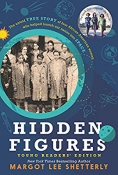
It is the powerful story of four African-American female mathematicians at NASA who helped achieve some of the greatest moments in the US space program. It brings to life the stories of Dorothy Vaughan, Mary Jackson, Katherine Johnson, and Christine Darden, who lived through the Civil Rights era, the Space Race, the Cold War, and the movement for gender equality, and whose work forever changed the face of NASA and the country.
Teacher Resources
Mattingly, E. (n.d.). Hidden Figures discussion guide. Retrieved from https://www.leifericsonelementary.org/ourpages/auto/2017/3/1/60025099/Hidden%20Figures%20Discussion%20Guide_pdf.pdf
Explore the film and it’s context.
References
20th Century Fox. (n.d.). Hidden Figures. Retrieved from https://www.foxmovies.com/movies/hidden-figures