
 Support
 Extension
If you have any questions or requests for assistance please contact your Teacher Librarians.
OR email: lis@mlc.wa.edu.au
Last updated 18th May 2018
Scotland is at war, and Macbeth defeats the enemy.
When Macbeth meets the witches on the heath, he can’t believe the fame and fortune they predict for him. Then he sees that with one murder it could all be within his grasp. But one murder leads to another…
View: Why you should read ‘Macbeth’.
Ted-Ed. (2017, November 2). Why you should read “Macbeth” [Video file]. Retrieved from https://youtu.be/rD5goS69LT4
Are you interested to see a theatre production of Macbeth?
It is on 6-9 June at the Dolphin Theatre, UWA.
Below is a small selection of print resources that include information about the life and times of William Shakespeare and his play Macbeth. You will also be able to locate study notes and companions for the play.
Locate these using the shelf Call No indicated. You will be able to locate further items on Shakespeare’s Theatre and Macbeth in the Library on the Non Fiction shelves at 792.0942 and 822.33.
William Shakespeare – Life and times
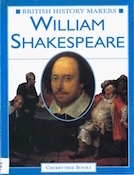
822.33B
Ashworth, L. (1997). William Shakespeare. Bath, U.K: Cherrytree Books.
This book tells the story of Shakespeare and the times he lived in.
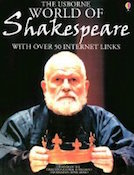
822.33D
Claybourne, A., Treays, R., & Brooks, F. (2001). The Usborne internet-linked world of Shakespeare. London, England: Usborne.
Why is Shakespeare still so popular? Find out about how Shakespeare lived, what tricks of the trade he used, and how his works have been performed, interpreted and adapted from his lifetime right up to the present day.
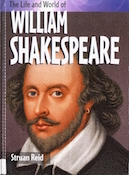 822.33B
Reid, S. (2003). The life and world of William Shakespeare. Oxford: Heinemann Library.
Find out about who Shakespeare was in this brief biographical text.
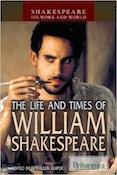
822.33D
Kuiper, K. (Ed.). (2013). The life and times of William Shakespeare. New York: Britannica Educational Pub.
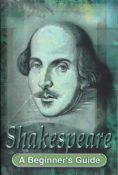
822.33D
Jay, R. (2000). Shakespeare : a beginner’s guide. London, England: Hodder & Stoughton.
This beginner’s guide contains the essential facts and concepts of the Bard and his work. It examines Shakespeare’s life and the times he lived in, as well as the language of the day and the themes and elements of his work. Key concepts are highlighted and explained in jargon-free language.
William Shakespeare – The theatre
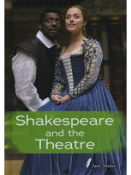 822.33B
Shuter, J. (2014). Shakespeare and the theatre. London, England: Raintree.
This book outlines the world of the theatre in which William Shakespeare wrote and did business.
Macbeth: The Play – Analysis
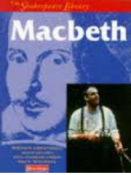
822.33 T6
Greenhill, W., & Wignall, P. (1996). Macbeth. Oxford: Heinemann.
This book provides an introduction to Macbeth and Shakespeare’s theatre. As well as an explanation of the historical background of “Macbeth”, this book also includes profiles of actors, directors and designers who have worked on the play.
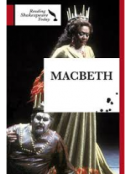
822.33 T6
Griffiths, K. (2016). Macbeth. New York: Cavendish Square Publishing.
Takes readers scene-by-scene through Macbeth while offering an in-depth analysis and overview. It included analysis of the characters, themes, motifs and symbols, as well as an examination about how Shakespeare’s works continue to find new life and remain relevant in the Internet Age.
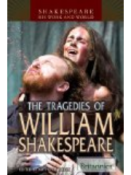
822.33 D
Kuiper, K. (Ed.). (2013). The tragedies of William Shakespeare. New York: Britannica Educational Pub.
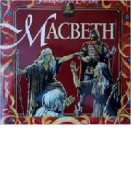
822.33 T6
Mulherin, J. (1994). Macbeth. Bath, U.K: Cherrytree Books.
Charts the downfall of a nobleman who murders the king in order to fulfil some witches’ promise that he himself will rule. The summarised story is followed by a brief description of the main characters.
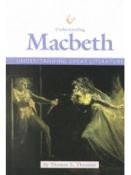
822.33 T6
Thrasher, T. (2002). Understanding Macbeth. San Diego, California: Lucent.
Introduces William Shakespeare and his life as a playwright and husband to Anne Hathaway, and covers “Macbeth” by summarising its characters and plot and providing a literary analysis.
Macbeth: The Play – graphic novel or prose format
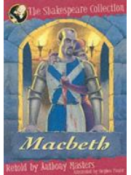
If you would like some help understanding the story of Macbeth, why not try one of these adaptations.


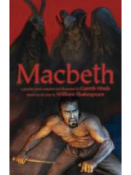

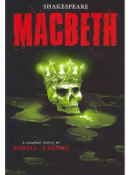
Use your keywords to search the Online Databases. Below are the most relevant database titles for this task.
Bloom’s Literature

EBSCO : Literary Reference Center

Here are some suggested resources that are available in these databases:
Rosenblum, J. (2012) ‘Macbeth’: Critical Introduction to the Play. The Facts On File Companion to Shakespeare. Retrieved from Bloom’s Literature database.
This article provides an analysis of themes, structure, style and imagery of the play.
Vernay, J. (2007). William Shakespeare’s ‘Macbeth’. Literary Contexts In Plays. Retrieved from Literary Reference Centre database.
This article provides a plot summary along with information about the style and language of the play, as well as historical, social and religious contextual information.
BBC Education. (1998). ‘Macbeth’. GCSE Bitesize English Literature. Retrieved from http://www.bbc.co.uk/schools/gcsebitesize/english_literature/dramamacbeth/
Provides study notes on context, plot, characters, dramatic effect, themes and language.
BBC Education. (1998). ‘Macbeth’. Higher Bitesize English. Retrieved from http://www.bbc.co.uk/bitesize/higher/english/macbeth/
Provides further study notes on context, plot, characters, dramatic effect, themes and language.
BBC Education. (2018 ). ‘Macbeth’ – 6 learner guides. Retrieved from https://www.bbc.com/education/topics/zgq3dmn
Highly recommended. From the new BBC Education website, these pages provide good revision notes with supporting visuals and evidence to help analyse the text. Plot summary, characters, themes, form, structure and language are covered. (Note that the video’s contained in these guides don’t play in Australia, but the clear revision notes make this site worth visiting.)
Crowther, John, (Ed.). (2005). No Fear ‘Macbeth’. Retrieved from http://nfs.sparknotes.com/macbeth/
Highly recommended. Shakespeare’s language along side a translation into modern English. A great site if you need support to read and understand the language of the play.
Cummings, M. (2013). ‘Macbeth’: a Study Guide. Retrieved from http://shakespearestudyguide.com/Macbeth.html#Macbeth
Florman, Ben. (2013). ‘Macbeth’ study guide. LitCharts. Retrieved from https://www.litcharts.com/lit/macbeth
Little, J., & Kuriyama, T (Eds). (2008). ‘Macbeth’ Study Guide. GradeSaver. Retrieved from https://www.gradesaver.com/macbeth
Mabillard, A. (2018). ‘Macbeth’ study guide. Shakespeare online. Retrieved from http://www.shakespeare-online.com/plays/macbeth/macbethresources.html
Paradigm Education, LLC. (n.d.). My Shakespeare : Macbeth. Retrieved from https://myshakespeare.com/macbeth
Highly Recommended. This site provides a full-text, interactive edition of Macbeth with a contemporary translation to make Shakespeare’s language more approachable; popup notes offering insights into Shakespeare’s literary devices; animated videos that explore the play and its context; performances of key scenes bringing Shakespeare’s language to life; and, interviews with the characters occur as events unfold.
SparkNotes Editors. (2002). SparkNote on Macbeth. Retrieved from http://www.sparknotes.com/shakespeare/macbeth/
The Play
The motion picture.
Shakespeare, W., Polanski, R., Tynan, K., & Braunsberg, A. (1971). The tragedy of Macbeth by William Shakespeare [Video file]. Retrieved from ClickView database.
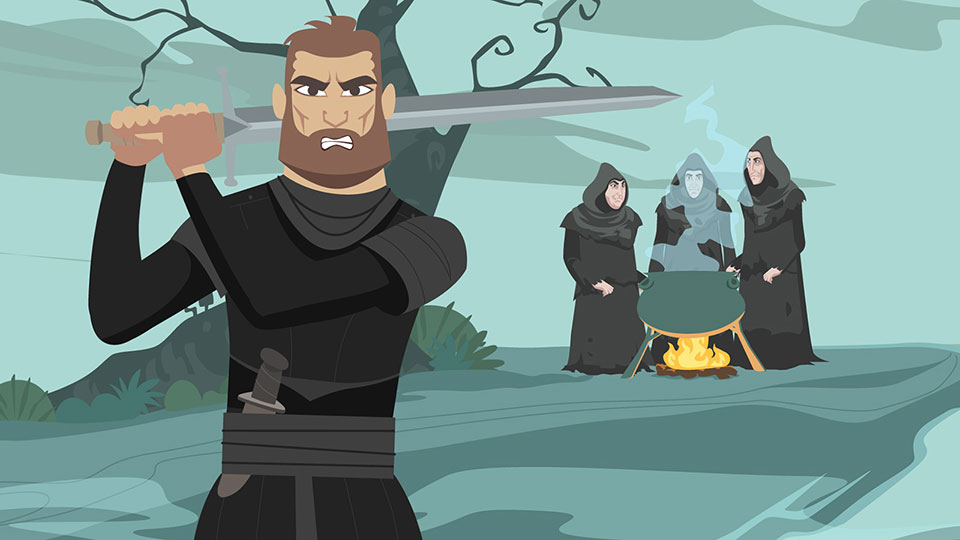
Macbeth (an animated adaptation).
BBC School Radio. (2018). Macbeth Clips. Retrieved from https://www.bbc.co.uk/programmes/p0572w00/clips
CLICK HERE or click on the image to the right to view these eight short (5 minute) episodes from BBC School Radio.
Macbeth summary
VideoSparknotes. (2010, October 12). Shakespeare’s Macbeth summary. [Video file]. Retrieved from https://youtu.be/uzAujyWpK_s
Context
Crash Course. (2018, January 23). Free Will, Witches, Murder, and Macbeth (Part 1) [Video file]. Retrieved from https://youtu.be/VPYOs0EGgJk
Mr Kable. (2018, January 23). The Great Chain of Being in Elizabethan Times [Video file]. Retrieved from https://youtu.be/XHjRtXokQwQ
Understand the ‘Great Chain of Being’ in Macbeth.
Shaw, S. (Director). (2012).Macbeth: Shakespeare uncovered with Ethan Hawke[Video file]. Retrieved from ClickView database.
Ethan Hawke looks at the greatest productions of Shakespeare’s Macbeth as he uncovers the true story behind the cursed ‘Scottish Play’.
Summary & Analysis
Plot Summary & Overview of themes
Bitesize Shakespeare. (2014). Macbeth [Video file]. Retrieved from ClickView database.
Excellent student and teacher resources are provided for this video. From the video link above, select “Resources” to download.
Learning Essentials. (2004). Before the play Macbeth: an analysis of Shakespeare’s play [Video file]. Retrieved from ClickView database.
Provides a detailed analysis of this text, including: discussion about the main characters, setting, themes and plot, the structure of the play, how language and imagery is used, different kinds of language and its purpose, the nature of a tragedy and a tragic hero, as well as the supernatural elements of the play. Key scenes are acted out, and will assist students to understand and appreciate this popular play.
This is a playlist of 10 videos that includes a plot summary and character, theme, motifs and symbol overviews.
Characters
Crash Course. (2018, January 30). Gender, Guilt, and Fate – Macbeth, Part 2 [Video file]. Retrieved from https://youtu.be/4zdkun4xzOs
John Green continues to talk about Shakespeare’s dark, bloody, Scottish play, Macbeth. This time around, he looks at how the play’s characters operate, how the play deals with gender, and Macbeth as an early anti-hero (Crash Course).
ABC Education.(2014). Lady Macbeth: the power of deadly persuasion [Video file]. Retrieved from http://abcspla.sh/m/1614115
A dramatisation of Act 1, Scene 7.

ABC Education.(2014). Macbeth: are you a man or a mouse? [Video file]. Retrieved from http://abcspla.sh/m/1801446
Get inside the mind of Lady Macbeth! Bell Shakespeare’s Kate Mulvany and John Bell explore the methods Lady Macbeth uses to manipulate her husband (ABC Splash).

Brogan, A., & Shakespeare, W. (1996). Macbeth, Act 1, Scene 7 [Video file]. Retrieved from ClickView database.
Louise Lombard, who plays Lady Macbeth in this version, examines the character of Lady Macbeth and compares how she has been played by other actresses.
Dramatic Conventions and Language
Ted-Ed. (2015, January 27). Why Shakespeare loved iambic pentameter – David T. Freeman and Gregory Taylor [Video file]. Retrieved from https://youtu.be/I5lsuyUNu_4
A look into the rhythm of Shakespeare’s words reveals a poet deeply rooted in the way people spoke in his time — and still speak today. Why do Shakespeare’s words have such staying power? David T. Freeman and Gregory Taylor uncover the power of iambic pentameter (Ted-Ed).
The Playwright – William Shakespeare
Biography. (2012, December 12). William Shakespeare – Mini Biography [Video file]. Retrieved from https://youtu.be/geev441vbMI
Watch a short video biography of William Shakespeare.
General teaching resources
- ClickView
Bitesize Shakespeare – https://clickv.ie/w/IX_i
- Folger Shakespeare Library
Shakespeare – http://www.folger.edu/shakespeare
Macbeth – https://www.folger.edu/macbeth
- Shakespeare’s Globe: Teach Shakespeare – http://teach.shakespearesglobe.com/
- Ted Ed – Why you should read “Macbeth” – https://ed.ted.com/lessons/why-should-you-read-macbeth-brendan-pelsue
- Teacher resource guide for Macbeth – Lincoln Theater Center – http://www.lct.org/media/filer_public/b1/9c/b19cb77d-63c1-4a35-a8cb-8ca7c9ba358d/shakespearesmacbethstudyguide.pdf
Teaching resources for English Learners
http://learnenglishteens.britishcouncil.org/uk-now/literature-uk/shakespeare-macbeth
Scootle* Resources:
Something wicked this way comes – unit of work
Using ‘The Scottish play’ – Teacher idea
* Teachers need to login to Scootle to access these resources.
Credits
Macbeth banner [Image]. (n.d.). Ticketsource. Retrieved from https://www.ticketsource.co.uk/date/334022
Macbeth hero [Image]. (n.d.). BBC School Radio: ‘Macbeth’. Retrieved from http://www.bbc.co.uk/learning/schoolradio/subjects/english/macbeth/episodes/episode_1
Mulherin, J. (1994). Macbeth. Bath, U.K: Cherrytree Books.